Tsunami advisory canceled after 7.0 earthquake off Okinawa

A tsunami advisory announced shortly after a 7.0-magnitude earthquake struck Japan's Ryukyu Islands early Saturday has been canceled, Japan's Meteorological Agency reported.

There was no tsunami damage "though there may be slight sea level changes from now on," it said, referring to the areas affected by the advisory -- the Okinawa Islands, the Amami Islands and the Tokara Islands.

The quake was centered 10 kilometers (6.2 miles) deep and struck at 5:31 a.m. (3:31 p.m. ET Friday) about 85 kilometers (53 miles) from Okinawa.

The quake was felt on Okinawa, with shaking that lasted about 15 seconds, said Lt. Col. Daniel King of the U.S. Pacific Command. He told CNN that commanders in Japan and Hawaii were trying to get damage and casualty reports from U.S. military stations on Okinawa, but had heard nothing in the immediate aftermath.

About 20,000 U.S. troops -- mostly Marines, along with Navy and Air Force personnel -- are stationed on eight bases on Okinawa, he said.

iReporter Kristina Donaldson, who lives in central Okinawa, said the quake "seemed to last longer than other ones we have experienced here."

"We felt the quake pretty good this morning," she said, but life there was largely unaffected.

"I just walked down to the coastline and the kids are walking to school as they always do. No sirens, or any destruction from where we are."

Okinawa resident Eric Shepherd said his grandmother-in-law described it as the strongest quake she had felt in her 90 years on the island.

"It felt like some really bad airplane turbulence," Shepherd said, adding that one of his two children slept through what seemed like a minute-long "rumble."

"I had no problem walking to the kids' room to check on them" during the quake, he said.

Japan gets first tsunami waves from Chile quake

Tsunami waves from the deadly 8.8-magnitude earthquake in Chile rippled across the Japanese coast on Sunday, but the initial ones did not appear large enough to cause damage.

Authorities urged residents to stay away because a second and third round of waves could gain strength. The first one, a 4-inch wave, hit Minami Torishima, according to the Japanese meteorological agency.

Minami Torishima is a small island in the Pacific Ocean.

An 11-inch wave was later recorded in the port of Nemuro, Hokkaido. It hit the port at 1:57 p.m. local time. Another 8-inch wave hit Hamanaka-cho, Hokkaido, at 2:05 p.m. local time.

Tens of thousands of residents evacuated Sunday morning from coastal Japan in anticipation of a possible tsunami after the earthquake.

The northern part of the main island could be hit by a tsunami at least 9 feet high, according to the meteorological agency.

Sunday's alert was Japan's first major tsunami warning in more than 15 years, the agency reported. In 1960, a tsunami spawned by Chile's 1960 earthquake killed 140 people in Japan.

Check out the world's biggest earthquakes since 1900

The Pacific Tsunami Warning Center on Saturday canceled warnings that initially covered the entire Pacific region.

Only Russia and Japan were under a widespread tsunami warning, the center said Sunday.

In the U.S. state of Hawaii, the cancellation occurred nearly two hours after the first waves came ashore. Coast Guard crews said they had found no significant damage to ports or waterways as a result of the tsunami.

But the tsunami center said some coastal areas may see small sea-level changes or unusual currents for the next few hours.

The cancellation "does not mean it is now safe to resume normal activities or re-enter evacuated shoreline areas," the tsunami center said. It said that county's civil defense agencies and local police departments would make those determinations.

"There was no assessment of any damage in any county, which is quite remarkable," said Gov. Linda Lingle. "It's just a wonderful day that nothing happened and no one was hurt or injured."

The warning was issued early Saturday after an 8.8-magnitude earthquake struck Chile, killing more than 300 people. Government officials are expected to announce an updated death toll Sunday at 12 p.m. local time (10 a.m. ET).

In Chile, tsunami waves came ashore along the coast shortly after the earthquake, U.S. Geological Survey geophysicist Victor Sardina said.

The largest was 9 feet near the quake's epicenter, Sardina said.

Another 7.7-foot wave hit the Chilean town of Talcahuano, according to Eric Lau of the tsunami center.

On the island of Juan Fernandez -- 400 miles (643 km) off Chile's coast -- a large wave killed three people, Provincial Governor Ivan De La Maza said. At least 10 people are missing.

Navigational buoys in Ventura County, California, got minor damage as a result of a 2-foot surge and waves, according to the Alaska Tsunami Warning Center. The Ventura County Fire Department had a report of damage to a resident's dock from the surge.

More than 2 million affected by earthquake, Chile's president says

Santiago, Chile -- As the sun set in Chile on Saturday, a picture of the immense structural damage wrought by an early morning earthquake had come clearly into focus, with the nation's president estimating that 2 million people had been affected in some way.

More than 300 people were killed, according to Chile's Office of Emergency Management, and 15 are missing.

The carnage from the 8.8-magnitude quake didn't begin to approach that unleashed by January's earthquake in Haiti, which left 212,000 people dead and more than a million homeless, even though it was considerably less forceful, with a 7.0 magnitude.

Saturday's quake was 700 to 800 times stronger, but at a greater depth -- 21.7 miles -- compared to the shallow 8.1-mile depth of the Haiti quake, which contributed to much of the damage there.

Coastal Chile has a history of deadly earthquakes, with 13 quakes of magnitude 7.0 or higher since 1973, the U.S. Geological Survey said. As a result, experts said that newer buildings are constructed to help withstand the shocks.

Still, the damage from Chile's earthquake was widespread. A 15-story high rise near the southern city of Concepcion collapsed; the country's major north-south highway was severed at multiple points; and the capital city's airport was closed after its terminal sustained major damage.

Chilean President Michelle Bachelet announced that all public events would be canceled for the next 72 hours and that the start of the the school year -- originally scheduled for Monday -- would be delayed until March 8.

"The forces of nature have hurt our country greatly," Bachelet said in a nationally televised message Saturday night. "We are now having to face adversity and stand again."

The quake struck at 3:34 a.m. (1:34 a.m. ET) off the Pacific coast at a depth of nearly 22 miles (35 km) and about 60 miles (100 km) northwest of Chillan, Chile, the USGS said. Santiago, the capital, is 200 miles (325 km) northeast of the epicenter.

Saturday's epicenter was just a few miles north of the largest earthquake recorded in the world: a magnitude 9.5 quake in May 1960 that killed 1,655 and unleashed a tsunami that crossed the Pacific.

The quake was followed by 76 aftershocks of 4.9 magnitude or greater, according to the USGS. That includes a 6.1-magnitude temblor in Argentina that killed a 58-year-old man and an 8-year-old boy in separate towns, the government-run Telam news agency said. Some buildings in the Argentine capital, Buenos Aires, were evacuated, though the city is 690 miles (1,111 kilometers) from Santiago.

Earlier Saturday, a large wave killed three people and 10 were missing on the island of Juan Fernandez, 400 miles (643 km) off the coast of Chile, said Provincial Governor Ivan De La Maza.

Across Chile, desperate relatives spent the day searching for missing loved ones. Many used the Internet to ask for help in finding relatives.

Millions of other Chileans began swapping tales of fear and confusion in the early morning hours, soon after the quake struck.

CNN iReporter Matias de Cristobal said many homes in her Santiago neighborhood were destroyed.

Cristobal tried to climb upstairs to check on her three children after she began feeling tremors Saturday, but she was slowed by shifting ground and falling objects.

Mirko Vukasovic, a 25-year-old illustrator in Santiago, had been dancing at a club early Saturday when the disco ball began swinging wildly. A chaotic evacuation was already under way when the lights went out, and everyone managed to escape, Vukasovic said.

"Broken windows and falling building parts was what welcomed us in the streets," he said.

Many initially greeted the quake with disbelief.

"It was 3 or 4 in the morning and I had come home late," said Aneya Fernando, an American who teaches English in Santiago. "Suddenly my bed was moving so violently that it woke me up."

"I'm on the 10th floor of a building and it was swaying and shaking," Fernando, 23, said. "Suddenly [the shaking] was just gone and I was confused. I thought it was in my head."

When Fernando's electricity returned 30 minutes later, she learned of the earthquake on TV.

The task of trying to rescue survivors and recover the dead continued into the night. Buildings lay in rubble, bridges and highway overpasses were toppled and roads buckled like rumpled paper. Mangled cars were strewn on highways, many of them resting on their roofs.

Santiago, the capital, lost electricity and basic services, including water and telephones. A chemical fire in the city that was spreading from one building to others forced the evacuation of everyone within 500 meters.

Chilean television showed buildings in tatters in Concepcion, in coastal central Chile. Whole sides of buildings were torn off, and at least two structures were engulfed in flames. Emergency teams rescued 30 people from one collapsed building in Concepcion.

iReport.com: Did you feel it? Share information, images with CNN

President-elect Sebastian Pinera, who will take office in March, also was monitoring the situation and warned, "The number of victims could get higher."

Bachelet declared areas of catastrophe, similar to a state of emergency, which will allow her to rush in aid. She noted that two of the nation's largest hospitals had suffered structural damage and patients were taken to other facilities.

Other public institutions also were affected.

"There were reports of riots at one of the jails," Bachelet said. "The jails have, of course, received significant damage... We are looking into possibly moving some of these inmates."

Two airlines, LAN and Cencosud, announced they were temporarily suspending services.

Several international humanitarian groups pledged help for Chile's relief effort, with AmeriCares announcing it was sending medical aid and an emergency response team to Chile. Oxfam said it's sending a team of water engineers and logisticians from Colombia and senior humanitarian staff from Mexico to help in relief efforts.

In a televised address Saturday, President Obama said that the United States has resources positioned to assist Chile if it requests help. Secretary of State Hillary Clinton said she will proceed Sunday with her planned trip to five Latin American countries, including Chile.

Meanwhile, the Japan Meteorological Agency issued a major tsunami warning for parts of its coastline, indicating the possibility of waves 9 feet or higher. Tens of thousands of coastal residents were evacuated ahead of the potential surge.

Follow tsunami warning information

The Philippines Institute of Volcanology and Seismology also issued a tsunami alert, with the first waves expected in the Philippines around 1 p.m. on Sunday (midnight Saturday ET).

In Hawaii, a tsunami warning was lifted around 1:45 p.m. (6:45 p.m. ET), the Pacific Tsunami Warning Center said.

Check out the world's biggest earthquakes since 1900

Small waves from the tsunami also reached Tasmania, an island about 150 miles (240 km) east of Australia, said Chris Ryan co-director of the Joint Australian Tsunami Warning Center in Melbourne, Australia.

No damage was expected from possibly stronger waves to follow, Ryan said.

"We have a two-level warning system," he said. "It's at the lower warning level. ... We expect some danger for people on the beach or close to water's edge ... but not to buildings or structures."

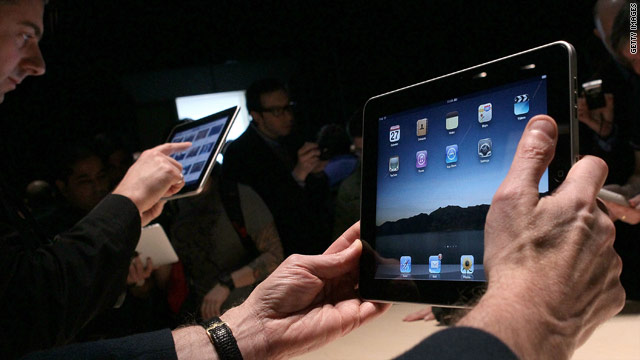
Reading the tea leaves of iPad competitors


It turns out Apple isn't the only company readying a touch-screen tablet computer.

We say that half-jokingly, of course. In the last few months, quite a few companies have signaled their intentions to go head-to-head (or at least offer an alternative) to Apple's much-ballyhooed iPad, which should hit stores in March.

Hewlett-Packard, Dell, Acer, and Sony have or are in the process of readying gadgets they say will compete with the iPad. We've seen some demonstrations at the Consumer Electronics Show and other trade shows, but several gadget makers admitted to waiting to see what Apple was going to do before setting the specifications and price of their competing touch-screen tablets.

Now that they know, what are they going to do about it? That might sound a bit silly considering companies like HP, Dell, and Acer have larger market share than Apple -- when it comes to computers. But in other, faster-growing areas -- smartphones and music players -- Apple's popularity far outstrips theirs. And in a new device category (it's reasonable to consider this a new category) they're all essentially starting from scratch.

So how will every company not named Apple try to compete for your touch-screen tablet computing dollar, assuming such a dollar exists? They will try to emphasize something about theirs being better, of course, be it in terms of price, style, speeds and feeds, or the movies, books, games, or TV shows available via their gadget.

Dell, for example, providing evidence that an old dog can at least attempt new tricks, tends to emphasize style these days. HP's commercials try to sell you on how easily their product fit into your lifestyle.

More than anything, they should try to avoid selling it as a computer, in the classic laptop computer sense. If Dell and HP and Acer and their compatriots do that, they'll end up trying to convince people to spend money on basically yet another Netbook; something that's sort of like a PC, but not quite.

It's just smaller, cheaper, and with less functionality than a traditional PC. And after sophisticated smartphones and cheaper Netbooks, do consumers really need yet another device that's not quite a laptop?

Trying to sell it as a computer that has a touch screen is also unwise because all of these companies have, with some exceptions, been there, done that, and not done that terribly well.

Tablets, in the traditional sense, currently account for about 1 percent of the PC market, according to IDC. HP and Dell currently sell tablet computers, but to niches of customers: utility companies, police officers, insurance adjusters, and so on.

If the main group every consumer electronics company wants a piece of, mainstream consumers, have mostly resisted their entreaties that tablet computing (in the Microsoft sense) is the future, what would make them change their minds suddenly?

You can't say they haven't put a lot of thought into solving this issue. Dell says it's been looking at this category of device for two years; HP researchers have been working on improving touch-based devices in its labs for much longer than that. We can glean what direction it will go with its tablets based on the bits of information already out there.

Reading the patterns

HP and Dell have both shown the basics of their upcoming devices, but with a bare minimum of information on price or details on what's inside. It's fairly clear neither wants to go the same route as Apple.

Price-wise, both HP and Dell have said they intend to come in below the iPad, which ranges from $499 to $829 depending on 3G functionality and storage available. That will be easier for Dell since its tablet, the Mini 5, with its 5-inch touch-screen, is almost half the size of the 9.7-inch iPad.

When Acer eventually comes up with a competing product, as it has said it plans to, it's also likely to be affordable, perhaps even more so than Dell's or HP's tablets. Emphasizing attractive pricing over fresh new features or design that sets it apart is, for better or worse, what Acer is really good at.

The Taiwanese manufacturer seized on the desire for cheaper laptops a few years back and moved swiftly up the ranks of PC makers by dominating in the inexpensive Netbook category. It's now No. 2 overall, right behind leader HP.

Sony, which says it is still evaluating its options here, is harder to predict. The company already has several models of e-reader devices, as well as a new touch-screen media device called the Dash. Though not easily portable, at $199 it's not ridiculously expensive either, and it's conceivable that Sony could rework the idea into a more mobile type of package.

The operating system is where the iPad's competitors will diverge most. Dell has already claimed its Mini 5 will run Google's Android, and HP's Slate will be a Windows 7 device.

The Android experience is closest to the iPad's in that it uses an application store to add new software to the device and is primarily focused on making it easy to consume media in a mobile environment. It would be wise for Dell to emphasize Android for those who want an alternative to the the Apple experience; it's clearly working for mobile phone makers.

By presenting the device with Microsoft at CES and by including Windows 7, HP has signaled that it's planning on selling the Slate as a computer, albeit without a physical keyboard.

For sure, there will be people who will buy Tablet PC 2.0, but it will be difficult to entice a significant amount of consumers. Businesses could be talked into spending their money on the device. But regular consumers? Don't count on it.

Apple has already hinted at which audience it's looking to attract: people who don't want to buy yet another computer. The iPad isn't supposed to replace a laptop. And it's not supposed to replace a smartphone. In the middle somewhere is a device whose purpose is rather murky.

It seems clear they're going after the people who don't necessarily like technology, the people for whom computers represent "work." Touch-screen tablets occupying the middle will likely resonate better with consumers if they don't think of the device as work, but as a way to enjoy leisure activities like reading books, watching YouTube videos, and wasting time on Facebook.

Companies like Dell, HP, and Acer should have a similar goal with their products: don't target the tech-savvy crowd to the exclusion of the mainstream. It's not the best way to build a broad customer base since early adopters are such a small part of the overall picture.

Trying to market by emphasizing things like "ours does Flash!" or "this tablet can run multiple apps in the background" will get a great reception from geeks, but not the mainstream Best Buy-shopping public. It's one of the worst habits of gadget makers selling on specifications.

"Tech companies tend to focus on features, not benefits," said Rashi Glazer, marketing professor at the University of California, Berkeley Haas School of Business, in a recent interview. "Regardless of segment I'm selling to, I want to focus on the real benefits."

And what those benefits will be are still up in the air, of course. Is it an e-reader or an entertainment system or some sort of computer? Is the answer "yes" to all three?

That's, as the marketers say, where companies will be able to "differentiate themselves" from the competition. Painful as that marketing gibberish is to the ears, it's what they'll have to do--so long as they also find a way to "differentiate" from the past.

Trek to gauge carbon's impact on Arctic sealife


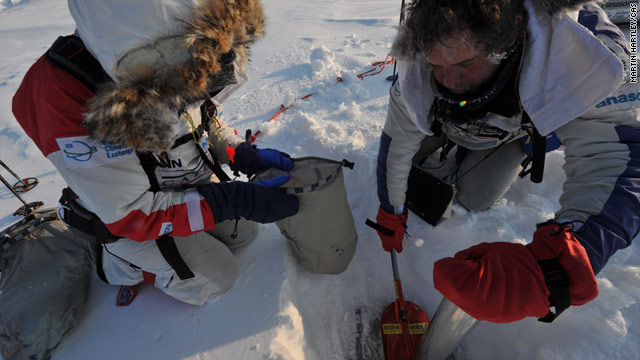
London, England: Two teams of explorers and scientists are on their way to the Arctic for the first international project to measure the amount of carbon dioxide in water beneath the ice.

Three British explorers will be airlifted to a remote location in the Arctic Ocean to start a 50-day trek towards the geographic North Pole in temperatures as low as minus 75 degrees Celsius, including wind chill.

A second team of international experts on ocean acidification will be working from a temporary ice base on Ellef Ringnes Island, on the edge of the Arctic Ocean near the Canadian coast.

Both teams will be drilling into the ice to collect water samples used to measure the amount of carbon dioxide in the water at various depths, according to the director of the Catlin Arctic Survey, arctic explorer Pen Hadow.

Read more about the explorers' challenge

"There is very little if any information about to what extent increasing levels of carbon dioxide in recent times has acidified the waters under the ice," Hadow said.

Oceans are believed to absorb around one third of the CO2 in the atmosphere, according to the Fourth Assessment report from the Intergovernmental Panel on Climate Change (IPCC).

Ocean acidification refers to the increasing acidity of sea water as carbon dioxide is absorbed from the earth's atmosphere. The ocean's acidity is measured by its pH level, which since 1750 has dropped by 0.1 units, according to the IPCC report.

Some scientists believe the ice acts as a cap that prevents carbon dioxide being absorbed into the water. Others believe carbon dioxide is able to move through pores in the ice into the water.

Part of the team's research will include the permeability of sea ice to carbon dioxide and the likely impact the thawing of large areas of ice will have on future CO2 levels in the sea.

The last time the Catlin Arctic Survey team ventured into the Arctic, in 2009, they measured ice thickness and concluded that ice could stop forming over the Arctic Ocean during summer in as little as 20 years.

"The sea ice is looking like it's not going to be a year round feature in the next 20 or 30 years. So the lid is coming off an ocean which is suddenly able to absorb carbon dioxide in a way that it hasn't been able to before," Hadow said.

This year's expedition will also test the likely impact of rising carbon dioxide levels on microscopic sea life.

Zooplankton and phytoplankton will be exposed to levels of CO2 that some scientists say could be present in the oceans by 2100 if the world keeps emitting carbon dioxide at current levels.

"The prediction is that shell-based organisms will start to lose these shells because you're creating more carbonic acid in the water," said the survey's science manager, Dr Tim Cullingford.

A research paper published in the Nature Geoscience earlier this month suggested that oceans are acidifying at their fastest rate in 65 million years.

Researchers from Bristol University compared the current rate of acidification to a sudden rise in temperatures at the Paleocene-Eocene boundary.

Then, surface ocean temperatures rose by up to six degrees Celsius within a few thousand years causing "widespread extinction" of organisms living deep down on the ocean floor.

"The widespread extinction of these ocean floor organisms during the Paleocene-Eocene greenhouse warming and acidification event tells us that similar extinctions in the future are possible," said the paper's lead author, Dr. Andy Ridgwell.

The report said laboratory tests showed that lower pH levels in the sea could result in the dissolution of shells, slower growth, muscle wastage and dwarfism which could have knock-on effects on the whole ecosystem.

The scientists at the Catlin Arctic Survey ice base will include experts from Plymouth Marine Laboratory, the European Project on Ocean Acidification (EPOCA), Université Pierre et Marie Curie-Paris 6, Villefranche and Fisheries and Oceans Canada.

On their return in late April, the data will be distributed to about 13 organizations for examination worldwide.

Phones, paper 'chips' may fight disease

A chemistry professor at Harvard University is trying to shrink a medical laboratory onto a piece of paper that's the size of a fingerprint and costs about a penny.

George Whitesides has developed a prototype for paper "chip" technology that could be used in the developing world to cheaply diagnose deadly diseases such as HIV, malaria, tuberculosis, hepatitis and gastroenteritis.

The first products will be available in about a year, he said.

His efforts, which find their inspiration from the simple designs of comic books and computer chips, are surprisingly low-tech and cheap.

Patients put a drop of blood on one side of the slip of paper, and on the other appears a colorful pattern in the shape of a tree, which tells medical professionals whether the person is infected with certain diseases.

Water-repellent comic-book ink saturates several layers of paper, he said. The ink funnels a patient's blood into tree-like channels, where several layers of treated paper react with the blood to create diagnostic colors.

It's not entirely unlike a home pregnancy test, Whitesides said, but the chips are much smaller and cheaper, and they test for multiple diseases at once. They also show how severely a person is infected rather than producing only a positive-negative reading.

This pattern could tell medical professionals whether a person is infected with certain diseases.

The paper chips are expected to be used in concert with mobile phones, which are exploding in popularity in the developing world.

Since people in remote parts of Africa and Asia often have to travel great distances by public transit or foot to reach a medical clinic, patients simply can take photos of the chips with cell phones and then send them to larger cities for diagnosis. And Whitesides said his group is also working with a cell phone maker to develop apps that would tell patients the results of their tests automatically if doctors aren't available.

"Doctors are as scarce a resource as money is," he said.

The tests may also be useful for highly contagious diseases such as hepatitis C, which require sick people to be quarantined to prevent further infection.

Watch Whitesides talk at the TED Conference

Whitesides' work, if successful, will bolster the argument that solutions to complicated problems often are found in simple, low-cost technologies.

From consumer electronics to medical equipment, a growing number of people seem to be searching for technologies that are cheap, reliable and even somewhat retro. Computer operating systems are being stripped of new features in favor of a simplified experience; basic devices such as the Flip cam seem more chic and popular than high-end video equipment.

The spiking costs of health care in the U.S. put pressure on doctors to perform expensive tests with high-end equipment only when necessary. And in the developing world, the medical community has realized there's not always electricity to power and doctors to manage high-tech medical clinics with rooms full of electronics and labs.

Cheap and reliable health care technologies are what the developing world and the Western world need, said Dr. Gaby Vercauteren, coordinator of diagnostics and laboratory technologies at the World Health Organization.

"Obviously smaller, easy to use, inexpensive technologies will find their way throughout the whole system and will provide better access to care to all those who need it," she said.

She said many medical diagnostic tests are too expensive for people in poorer areas of the world to afford. But they are the essential first step to health care.

"Today, many people don't get the necessary diagnosis that will lead to access to the right treatment because diagnostic tests and lab tests are, most of the time, out of pocket," she said. "People don't have the money to buy that. Therefore, often, diseases are not diagnosed or only diagnosed far too late."

Keith Herold, an associate professor of bioengineering at the University of Maryland, said Whitesides' ideas build on a branch of science that's trying to develop "lab-on-chip" technologies, which use credit-card size devices to perform laboratory analyses.

Whitesides' paper chips are much simpler than other lab-on-chip projects, many of which require intricate production methods and heavier materials such as glass and plastic. But simpler might be better in this case, he said.

"I think it's real. It can be very useful, but it's not the fanciest manifestation of lab on a chip by any means," he said. "If it works and it's cheap, it's good for everybody."

Still, Whitesides' paper tests could run into some pitfalls.

Vercauteren, of the WHO, said the paper may mold in humid, hot climates. And it's still important for people to get access to doctors so they know what to do about their diagnoses, she said.

She said its possible to conquer those challenges.

The first test, Whitesides said, will be designed to detect liver function, which is important for people with HIV and who are on some strong medications.

Whale grabbed ponytail, pulled trainer into tank, SeaWorld says


Whale shows at SeaWorld were canceled Thursday, and officials were re-evaluating safety procedures a day after a 12,000 pound killer whale grabbed a trainer's ponytail, dragged her under water and killed her in front of shocked onlookers at Shamu Stadium.

Dawn Brancheau, 40, was "pulled underwater for an extended period of time," by the whale, Chuck Tompkins, SeaWorld's curator of zoological operations, told CNN's "American Morning." He said he had no further information on the exact cause of Brancheau's death, citing an ongoing investigation.

The incident occurred about 2 p.m. Wednesday. Tompkins said the whale, named Tillikum, had just finished a session with Brancheau, who was standing by the side of his pool and leaning over the whale, rubbing his head.

"She had a long ponytail that brushed in front of her and apparently got in front of his nose," Tompkins said. "He probably felt it." Tillikum grabbed the ponytail and pulled Brancheau into the water, he said.

Earlier accounts varied on how Brancheau ended up in the tank.

A witness told CNN affiliate WKMG-TV that the whale approached the glass side of the 35-foot-deep tank at Shamu Stadium, jumped up and grabbed Brancheau by her waist, shaking her so violently that her shoe came off. A SeaWorld employee, who asked not to be identified, described the incident the same way.

Orange County Sheriff's Office spokesman Jim Solomons said Brancheau slipped into the tank.

Tillikum has been linked to two other deaths. He and two other whales were involved in the drowning of a trainer at a Victoria, British Columbia, marine park in 1991. The trainer fell into the whale tank at the Sea Land Marine Park Victoria and was dragged underwater as park visitors watched.

In 1999, Tillikum was blamed for the death of a 27-year-old man whose body was found floating in a tank at SeaWorld, the apparent victim of a whale's "horseplay," authorities said then.

The Orange County Sheriff's Office said the man apparently hid in the park until after it closed, then climbed into the tank.

The 22-foot-long whale was "not accustomed to people being in his tank" and "wouldn't have realized he was dealing with a very fragile human being," Solomons said at the time.

Because of Tillikum's history, as well as his size, trainers did not get into the water with him, Tompkins told CNN. Specific procedures were in place for working with him, he said, although "obviously, we need to evaluate those protocols."

"He's just a really, really large animal," Tompkins said, noting that female killer whales weigh 6,000 pounds -- half of Tillikum's weight. "Just because of his size alone, it would be dangerous to get in the water with him." But the whale's previous incidents were also taken into account, he said.

Tompkins pointed out that the 1991 incident occurred before SeaWorld owned Tillikum and that no one is sure what took place in the incident eight years later.

Tillikum could have been trying to play with Brancheau or get her attention or companionship, said Nancy Black, a marine biologist who has studied whales for 20 years. Such whales play with seals and sea lions in the wild, tossing them in the air, she said. But they do not kill them and end up letting them go.

"I don't believe the killer whale purposely intended to kill the woman," she said. "It was more likely an accident, I would guess." But, she said, the whale could also have been frustrated for some reason.

Tompkins said there were no indications of any problem with Tillikum or any other animal just before the incident, and that Brancheau "had done a great session with him ... he seemed to enjoy what he was doing at the time."

The incident, however, raises larger questions regarding the captivity of wild animals.

A spokesman for People for the Ethical Treatment of Animals called the death "a tragedy that didn't have to happen."

Jaime Zalac said the organization had called on SeaWorld "to stop confining oceangoing mammals to an area that to them is like the size of a bathtub, and we have also been asking the park to stop forcing the animals to perform silly tricks over and over again. It's not surprising when these huge, smart animals lash out."

Black told CNN that killer whales in the wild live in family groups, and males stay with their mothers their entire lives. Family members rely on each other for social structure and play, and they cover hundreds of miles of ocean, she said.

"I think they do need more space, and situations like that do cause a lot of stress for them, most likely." She said Tillikum had a "flopped fin," something seen in captivity but not much in the wild.

But Tompkins said, "We have a tremendous track record with these animals at SeaWorld" and a very small percentage of problems. It's useful to have animals in the park, he said, because it gives scientists a chance to study them and gives members of the public an opportunity to see them and learn about them.

"This is the first time in 46 years that we've ever had an incident like this with a trainer," he said. Although Tillikum is large and has to be handled carefully, "to mark him as a killer is unfair."

In 2006, a trainer at the adventure park was hospitalized after a killer whale grabbed him and twice held him underwater during a show at Shamu Stadium.

With mom in 'heart and soul,' Rochette goes for medal


Things were good for Canadian figure skater Joannie Rochette in the weeks before the Winter Olympics. She had a 2009 world silver medal. Training was going well. And, she told her agent, she had her confidante and source of strength by her side.

"'I have my mom,'" agent Dave Baden recalled Rochette saying to him at the time. "'At this point, I know what to do, and I have my mother.'"

"She's been training for this all her life, so the only thing she needed to get to that next level was the strength she got from her mother," Baden said.

That strength, he said, is helping her pull through the Olympics in Vancouver, British Columbia, even though her mother is now gone.

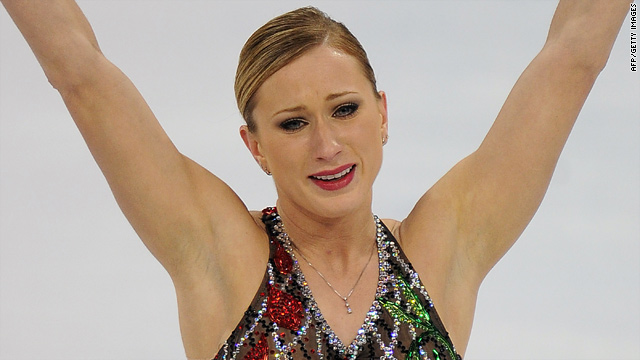
Therese Rochette died Sunday of a heart attack in Vancouver at age 55, Canadian Olympic officials said. Joannie Rochette opted to stay in the games, and two days later stirred a crowd with a courageous performance that earned the third best score in the women's short program.

On Thursday, the 24-year-old will finish her drive for her first Olympic medal during the free skate program at Pacific Coliseum.

Rochette, of Ile Dupas, Quebec, "shared everything with her mother," said Mike Slipchuk, high performance director for Skate Canada.

"You could say it was like a sister-sister relationship rather than just mother-daughter. They talked all the time," Slipchuk said in a telephone interview Wednesday.

Therese Rochette herself wrote of the bond she had with her daughter in an e-mail interview with The Christian Science Monitor in January. She said that she was the first person her daughter called whenever a problem occurred, though Joannie didn't need a great amount of support, the Monitor reported this week.

"The hurdles she faces motivate her to rise above them," Therese Rochette wrote to the Monitor. "Joannie has always been naturally determined and persevering."

Supporting her love of skating, Rochette's parents sent their only child to a sports training center about an hour from home when she was 13, with her father, Normand, working overtime to get the money needed, according to Baden and the biography on her Web site.

In the early years at the training center, she lived with a sponsor family for most of the week. Later, she would get her own apartment near the center, visiting her parents on weekends, IMG agent Baden said by phone Wednesday.

Joannie Rochette rose through the ranks, winning novice and junior national titles before winning six straight senior Canadian championships from 2005 to 2010. In 2006, she placed fifth at the Winter Olympics in Turin, Italy, and last year she finished second at the World Figure Skating Championships in Los Angeles, California.

"We're in a sport when skaters can come in at 15 or 16, win a medal and leave. Joannie has continued to develop and get stronger, and now, in her 20s, she's hitting her peak," said Slipchuk, himself a 1992 Olympic figure skater for Canada. "She's put herself in the upper echelon."

Rochette aspires to more than just skating excellence. A science student at Quebec's College Andre-Grasset, she "loves and wants to give back to [skating] but wants eventually to go on and do something in a different field," perhaps something medical, Baden said.

Last summer, she went to Peru with World Vision, in part to record material promoting the relief agency's programs. While there, she visited women and children living in poverty, Baden said.

"She spent days with kids, going to their schools, learning about nutritional needs, learning what is needed to get better education and living conditions and improve health," Baden said. "She's a shy person, but she was able to relate to the kids and hug them and show affection. She's strong and caring."

Now she's back on ice, aiming for a medal -- this time without her mom. Her father, who'd traveled with Therese to Vancouver to watch their daughter, told Joannie of her mother's death Sunday morning. Supported by a close circle of people -- including her father, her boyfriend and her longtime coach -- she practiced that day.

At the end of Tuesday's performance, Rochette wept in the arms of her coach, Manon Perron. Rochette and Perron don't plan to address the media until after Thursday's performance, Slipchuk said.

"She handled [Tuesday] well," Slipchuk said. "The crowd was so supportive, and at the end of the program you saw the release of what was inside of her."

Rochette's comment to Baden about her mother a couple months ago struck him at the time as poignant. He said he remembered it upon hearing of Therese Rochette's death.

"Her mother is inside her heart and soul, so she'll be there for her," he said, "and [Joannie] will draw from that strength."

Why Americans love the Dalai Lama


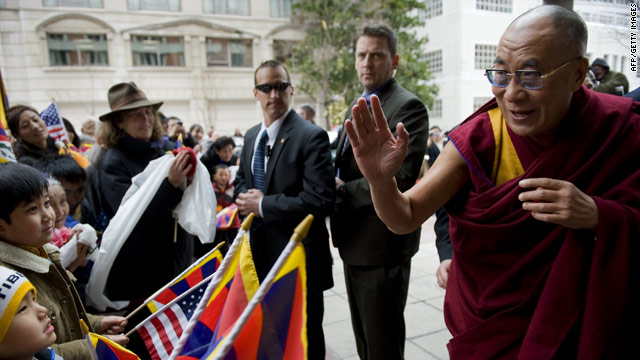
He's been decorated with awards and called one of the world's most influential people. He's addressed packed auditoriums and waved to crowds who line streets just to catch a passing glimpse of him. He's shaken the hands of countless global dignitaries and earned a fan base following on Facebook that might rival that of Hollywood stars.

He is His Holiness the 14th Dalai Lama, the 74-year-old spiritual leader of Tibet and the head of the Tibetan government-in-exile, based in Dharamsala, India. And though he describes himself, according to his Web site, as "a simple Buddhist monk," the love so many Americans and others have for him has, no doubt, bestowed on him iconic status -- whether he sees it that way or not.

"I'd love to be in his presence. I'd love to be in an audience where he speaks," said Jerilee Auclair, 55, of Vancouver, Washington, who has yet to have that pleasure. "I yearn for it. I watch his schedule to see if/when he'll be in my area. ... I love what he stands for. His inner peace inspires me to find mine, daily."

She's far from alone in her admiration.

A CNN/Opinion Research Corp. survey released Thursday, the same day the Dalai Lama visited the White House, showed that 56 percent of Americans hold a favorable view of him, putting him "in the same neighborhood as other major religious figures," said CNN Polling Director Keating Holland. "Favorable ratings for the pope, at 59 percent, and Billy Graham, at 57 percent, are virtually identical."

Not bad for a guy who lives on the opposite side of the globe, is entrenched in a decades-old political and cultural struggle many don't understand, and lives according to a tradition few Americans follow. Less than 1 percent of Americans identify themselves as Buddhist, with less than 0.3 percent of those being Tibetan Buddhist, according to The Pew Forum on Religion & Public Life.

But what he represents resonates with Americans who may need a figure like the Dalai Lama to look to, said Ganden Thurman, executive director of New York City's Tibet House, an organization dedicated to preserving Tibetan culture and civilization.

"He stands for achieving peace by way of peace, and since Gandhi and Martin Luther King aren't around, he's a placeholder for that kind of position," he said. "He says he's a 'simple monk,' but that's wishful thinking. He's a monk that's been saddled with the responsibility of shouldering the hopes and dreams of millions of Tibetan people. ... He's doing the best he can with that, and frankly, these are the kind of people we admire."

Not that Thurman, 42, always treated the Dalai Lama with this kind of reverence. His father, Robert Thurman, co-founded the Tibet House, is an Indo-Tibetan Buddhist studies professor at Columbia University and holds the first endowed chair in Buddhist studies in the West, according to the university's online biography. The older Thurman, who also happens to be the father of actress Uma Thurman, was a personal student of the Dalai Lama, and it was through this relationship that his son first met the spiritual leader.

"My earliest memory of meeting him, I was around 4. I was a pretty rambunctious 4-year-old," he said with a laugh, guessing that he probably jumped on His Holiness and grabbed at the man's glasses. "Diplomatic protocol wasn't high on my list of priorities."

Tenzin Tethong has known the Dalai Lama since he was a child. He worked in the exile government and served as the spiritual leader's representative in New York and Washington during the 1970s and 1980s. Now the president of The Dalai Lama Foundation, a Redwood City, California, organization that promotes peace, Tethong said he organized the Tibetan leader's first visit to the United States in 1979, 20 years after he had gone into exile

He recalled not being sure they'd be able to pull off the visit because by the early 1970s, the U.S. had normalized its relations with China, which has long viewed the Dalai Lama as a threat to its national unity on the issue of Tibetan autonomy. But they came at the invitation of various colleges and religious groups, and the American fascination with the Dalai Lama -- the curiosity about his exotic past, his beliefs and his teachings -- spoke volumes then, Tethong said.

In the decades since, the Dalai Lama's star power has only risen as Americans have learned more about his commitment to nonviolence, interfaith outreach and more. For starters, there was that Nobel Peace Prize he won in 1989.

High-profile supporters, like actor Richard Gere, helped give him and his people's struggles pop culture prominence, as did several mainstream films including "Seven Years in Tibet," starring Brad Pitt, and "Kundun," directed by Martin Scorsese.

With the increased exposure, there has also been a growing prevalence of "Free Tibet" bumper stickers, the appearance of Tibetan prayer flags in suburbia and Facebook fans who shower the Dalai Lama with praise.

"Have a nice and easy day with Obama! Namaste," one woman wrote Thursday. "thank you for all your love, guidance and wisdom ... u changed my life," a man added. And then this from a college-student fan: "HH Dalai Lama!! You kick metaphorical ass!!!"

How has all this attention not gone to his head?

He stands for achieving peace by way of peace, and since Gandhi and Martin Luther King aren't around, he's a placeholder for that kind of position.
--Ganden Thurman, executive director of Tibet House

"When fame happens, people get carried away, right? The Dalai Lama, despite tremendous adoration as well as adulation ... is very conscious of that," Tethong said. "One of the Buddhist practices is to always be very aware of one's self and how one looks at one's self and not to be carried away with one's ego."

Not standing on formalities -- he playfully threw snow at reporters outside the White House on Thursday -- staying grounded and his constant ability to exude warmth and joy have made him easy to love, people who admire him say.

"He really is the real deal -- a truly loveable guy. He lives his values," said Jamie Metzl, executive vice president of the Asia Society, a global organization that seeks to increase understanding and relationships between the U.S. and Asia. "Recognizing someone who lives their life according to such positive principles helps us all grow."

And Metzl, who said he's met the Dalai Lama three times, suggested the Chinese government, through its denunciation of the spiritual leader, has bolstered his recognition. He said that by saying the Dalai Lama is "a wolf in sheep's clothing," a claim Metzl said doesn't match what people read and see, "the Chinese are doing a great deal to turn him into a rock star."

But nothing does more to make people appreciate the Dalai Lama than being with him, said Charles Raison, a psychiatrist with Emory University Medical School.

Raison, who's been involved in a program where Western doctors work with and exchange teachings with Buddhist monks, recounted a time when he, his wife and several others met with the Dalai Lama about four years ago.

"Many people, myself included, have a powerful experience in his presence. I nearly erupted in tears," he said. And his wife, whom he said "does not have a religious bone in her body" was "just beaming."

He said studies have long shown that people have a physiological response to the behaviors, feelings and even smells put forth by others.

"Buddhists," he added, "say that sweet smells come from a saint -- a mark of spiritual advancement."

And given the Dalai Lama's effect, his smile, his laughter, his sense of peace and gentle spirit, it's no wonder people fall for him. Even if they haven't had the chance to meet him.

Oral cancer's toll cruel


It brought a tough, All-Star NBA coach to tears this week. And it stilled the voice of a famous film critic.

Head and neck cancers are rare, but known to be severe -- they can strip away a person's voice, distort the face and rob the basic abilities to eat, drink and swallow. The cancer can be so disfiguring, some patients seldom appear in public.

In a tear-filled press conference this week, Denver Nuggets coach George Karl announced he has a type of neck and throat cancer.

Karl said he will continue to coach, but will miss some games and practices. His type of cancer -- a squamous cell tumor found on his right tonsil -- is the most common and expected to be treatable with radiation and chemotherapy.

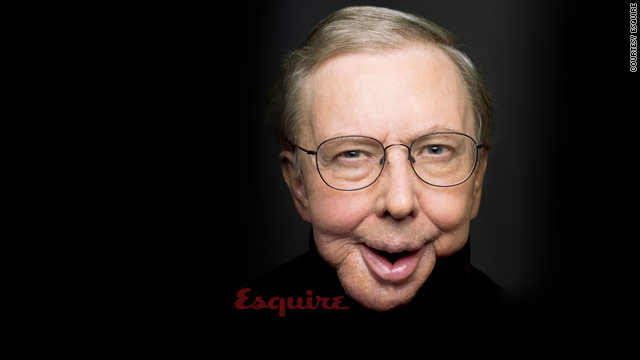
Also this week, Esquire profiled film critic Roger Ebert, who also had a head and neck cancer. He suffered complications from surgery to treat the cancer that had spread to the salivary gland. The magazine published a full-page photo of the film critic, who no longer has a lower jaw.

Ebert spent little time feeling sorry for himself: "If we think we have physical imperfections, obsessing about them is only destructive. Low self-esteem involves imagining the worst that other people can think about you. That means they're living upstairs in the rent-free room," he wrote on his blog after the photo published.

While Ebert cannot speak, he continues to lambaste bad movies online.

Head and neck cancers include abnormalities in the nasal cavity, sinuses, lips, mouth, tongue, esophagus, salivary glands, throat, and voice box.

These types of cancers tend to affect men in their 60s who had histories of alcohol and tobacco, but, they are also striking younger people who don't drink or smoke. This is believed to be related to the human papillomavirus

All-Star NBA coach George Karl announced he has a type of head and  neck cancer this week.
All-Star NBA coach George Karl announced he has a type of head and neck cancer this week.

"Now there's a viral cause to the cancer," said Dr. Carol Bradford, director of the head and neck oncology program at the University of Michigan Comprehensive Cancer. "It is not viewed as patients causing their own cancer."

There are about 50,000 cases of head and neck cancers every year, compared with 200,000 new cases for breast and prostate cancer.

Because of its rarity, there is less awareness of head and neck cancers, said Dr. Christine Gourin, director of the clinical research program in head and neck cancer at the Johns Hopkins School of Medicine.

"There aren't many celebrities or public figures who have head and neck cancers that we can hold up as an example," she said. "If you see patients when they come with advanced tumors, they can't breathe, they can't swallow their saliva, they look disfigured and their speech is abnormal, their breathing is affected. I don't think there are many people who want to go out and be a poster child -- so there's little attention."

The disease and subsequent treatments could result in disfigurement.

More so than any other cancer, people who get head and neck cancer have a visible disability, said Dr. M. Boyd Gillespie, a past president of the South Carolina Head and Neck Cancer Alliance.

It just takes away your dignity, your ability to go out in public and do simple things -- like you can't go out to dinner.
--Christine Gourin, associate professor at the Johns Hopkins School of Medicine
RELATED TOPICS
  • Oral Cancer
  • Cancer
  • Roger Ebert
  • George Karl

"There's a higher rate of people not being able to resume their professional life after the treatment, because nowadays the service economy and communication is so important," he said.

Even the process of eating can appear distressful.

Some patients do not want to be seen in restaurants choking, coughing and having difficulty eating, said Gillespie, who is an associate professor of otolaryngology-head and neck surgery at the Medical University of South Carolina.

"It just takes away your dignity, your ability to go out in public and do simple things -- like you can't go out to dinner," Gourin said. "It takes away things we take for granted -- eating, speech and appearance."

After the cancer has been removed, doctors can try to reconstruct the affected areas by using tissue and bone from other areas of the body. Ebert had several surgeries to reconstruct his throat and jaw by taking tissue and bone from his back, arm, and legs. But the reconstructions did not last, according to Esquire.

CNN's marquee blog: Roger Ebert keeps voice alive

If the cancer is treatable with radiation and chemotherapy, the recovery is more positive.

The cancer affecting Karl is believed to be caused by a virus. This means he has a better prognosis, his doctor, Jacques Saari said in a news conference.

The five-year survival rate for viral-related cancer is 80 percent compared with 40 to 50 percent for nonviral-related cancer.

A doctor discovered a large lump, measuring two inches in diameter in Karl's neck in December.

Karl's treatment will force him to miss some games. He expressed hopes to recover in time to coach the Nuggets in the playoffs.

"I think the major desire for me is to kick this cancer's butt," Karl said in this week's press conference. In 2005, he underwent surgery for prostate cancer.

The radiation and chemotherapy have side effects, such as burnt tissue, redness, inflammation of the lining of the mouth, permanent dry mouth, weight loss and difficulty swallowing. Taste buds can be permanently damaged in some cases.

Through the typical seven weeks of treatment, most people continue to work.

"Some feel the need to work during treatment to retain normalcy," Gourin said.

The voice box is usually not affected, so Karl could do what head coaches often do -- yell at referees.

Powered by Blogger