Explosions, gunfire hit downtown Kabul

Kabul, Afghanistan -- At least two explosions and gunfire shook downtown Kabul on Monday morning, with the Taliban saying it was conducting a militant operation.

The attack started as 14 members of Afghan President Hamid Karzai's Cabinet were to be sworn in, said Parliament member Fawzia Koofi.

About 20 Taliban insurgents entered the presidential palace; the ministries of finance, mines and justice; and the Serena Hotel, said spokesman Zabiullah Mujahid. The militants claimed responsibility for one explosion, which was later followed by at least one another.

In a differing account, NATO-led forces said "several small explosions" and gunfire were reported near the Feroshgah e Afghan Shopping Center and the Serena Hotel.

At least two insurgents had been killed at the shopping center, NATO-led forces said in a news release, which also said that Afghan national police had secured all roads in the area.

An unknown number of downtown buildings were on fire, with smoke billowing above. It was not immediately clear which buildings were burning.

Monday's assault followed weekend violence that killed at least three international troops and 14 militants in Afghanistan, authorities said.

UN confirms death of Haiti mission chief Annabi

UNITED NATIONS – The UN mission chief in Haiti, Hedi Annabi of Tunisia, died in Tuesday's earthquake that devastated the country's capital, UN Secretary-General Ban Ki-moon announced Saturday.

He was believed to be 65.

In a statement, Ban also confirmed the death of Annabi's deputy, Brazilian Luiz Carlos da Costa, and of the acting UN police commissioner in Haiti, Doug Coates of Canada.

Ban gave no details of how the bodies of the three men had been found, but the world body said earlier this week they were under the rubble of the Hotel Christopher, the UN headquarters in Port-au-Prince, and could be alive or dead.

Haitian President Rene Preval said Wednesday that Annabi had died, but the United Nations said at the time it could not yet confirm that.

Annabi is the first UN mission chief to die in the line of duty since Sergio Vieira de Mello of Brazil was killed along with 14 other UN staff when a truck bomb exploded outside the UN headquarters in Baghdad in 2003.

Ban described Annabi as "the gold standard of service against which all who had the privilege to work with him were measured." He hailed the Tunisian's "unparalleled work ethic -- he was the first in and the last out every day for his entire career."

After working in the Tunisian foreign service, Annabi joined the United Nations in 1981. For nearly a decade he worked on a political settlement in Cambodia before joining the UN peacekeeping department where he rose to be an assistant secretary-general. He had held the Haiti job since 2007.

Ban said of Annabi, da Costa and Coates that "in every sense of the word, they gave their lives for peace."

By Friday, the UN death toll in Haiti had stood at 37. The deaths announced by Ban would raise that to at least 40, but U.N. official expect it ultimately to rise well over 100.

Ban visits Haiti - the UN's worst ever disaster

NEWARK, New Jersey, United States - UN Secretary-General Ban Ki-moon headed to Haiti on Sunday to experience first-hand what he described as the "most serious humanitarian crisis" to face the world body in decades.

"I am going to Haiti with a very heavy heart to express solidarity and full support of the UN to the people of Haiti," Ban told journalists accompanying him on a day-long trip to the disaster zone.

Tuesday's 7.0-magnitude quake in Haiti has killed as many as 100,000 people and was also the worst ever disaster for the UN with 40 staffers confirmed dead and nearly 330 others still unaccounted for.

"We have to prepare for the worst," Ban said as he flew out of Newark, referring to UN employees still missing after the disaster that flattened much of the capital Port-au-Prince and nearby towns in western Haiti.

Ban said the three top priorities were: to save as many people as possible, to bring emergency humanitarian aid in the form of water, food and medication, and to coordinate the massive aid effort, he said.

The UN has noted that at least local government structures remained after the 2004 tsunami hit Indonesia's Aceh province, but in the Haiti town of Leogane, for example, all public services were lost in the earthquake.

Between 20,000 and 30,000 people are thought to have died in that town alone, an indication of the horrific scale of the catastrophe beyond Port-au-Prince.

Ban will assess the Caribbean nation's needs and attempt to boost the shattered morale of the Brazilian-led United Nations Stabilization Mission in Haiti, MINUSTAH.

The UN secretary general is expected to meet Haitian President Rene Preval and pledge the world body's full support in the wake of the disaster, which could have claimed up to 100,000 lives.

On the eve of his departure, Ban grimly confirmed that MINUSTAH civilian chief Hedi Hannabi, his Brazilian deputy Luiz Carlos da Costa and acting police commissioner, Doug Coates of the Royal Canadian Mounted Police, were confirmed to have died.

"The United Nations was his life and he ranked amongst its most dedicated and committed sons," the UN boss said of Annabi, a veteran Tunisian UN troubleshooter.

Annabi was meeting with a visiting Chinese police delegation when the quake flattened MINUSTAH's main headquarters building in Port-au-Prince's Christopher Hotel building.

Ban has sent Edmond Mulet, a top UN peacekeeping official and Annabi's predecessor, to Port-au-Prince to take charge of the decapitated MINUSTAH in an interim capacity.

Accompanying Ban in Haiti will be UN Development Program head Helen Clark, top UN peacekeeper Alain Leroy, UN humanitarian chief John Holmes and Susana Malcorra, who is in charge of the world body's field support operations.

Holmes on Friday appealed for 562 million dollars from the world community to help three million quake victims in the western hemisphere's poorest country for a period of six months.

The money is to be used for urgently needed food, water and sanitation, medical supplies, tents and blankets, logistics and education.

Ban last toured Haiti with former US president Bill Clinton in March 2009 to urge the international community to aid the island nation after it was battered by hurricanes the previous year.

Clinton and fellow former president George W. Bush, named by the White House as special coordinators of aid to Haiti, launched an appeal Saturday to raise tens of millions of dollars for the stricken country.

Google denies leaving China, seeks negotiations

SHANGHAI – Google Inc enters a second week of high stakes brinkmanship with China's government, amid speculation the firm has decided to pull out of the world's biggest Internet market over cyber-spying concerns.

Google, the world's most popular search engine, said last week it was thinking about quitting China after suffering a sophisticated cyber-attack on its network that resulted in theft of its intellectual property.

The company has said it is no longer willing to filter content on its Chinese language google.cn engine, and will try to negotiate a legal unfiltered search engine, or exit the market.

Most of the filters on google.cn were still in place on Sunday, though controls over some searches, including the June 4, 1989 Tiananmen crackdown, appear to have been loosened.

The Google announcement captured the attention of China's 384 million netizens, the world's largest Internet market by users, with blogs and local media quoting unnamed insiders as saying Google has already decided to close its offices in China.

Google has denied that, saying the company is still in the process of scanning its internal networks since the cyber-attack in mid-December. Google also said it would hold talks with the Chinese government over the next few weeks.

China has tried to play down Google's threat to leave, saying there were many ways to resolve the issue, but insisting all foreign companies, Google included, must abide by Chinese laws.

Washington said it is issuing a diplomatic note to China formally requesting an explanation for the attacks.

The Google issue risks becoming another irritant in China's relationship with the United States, already strained by arguments over the Chinese currency's exchange rate, trade protectionism and U.S. arms sales to Taiwan.

Washington has long been worried about Beijing's cyber-spying program. A congressional advisory panel said in November the Chinese government appeared increasingly to be penetrating U.S. computers to gather useful data for its military.

When Google introduced its google.cn website in 2006 with the decision to self-censor searches, it said the move would benefit the Chinese people by expanding access to information.

"We think we have made a reasonable decision, though we cannot be sure it will ultimately be proven to be the best one," a top level Google spokesman told the U.S. Committee on International Relations in 2006.

Google's move to publicly denounce censorship and accuse Chinese hackers of launching an attack that resulted in the theft of its intellectual property was seen as a bold move.

"We have never seen a company take on the Chinese government in such a public and confrontational manner," said James McGregor, senior counselor to public affairs consultancy Apco Worldwide.

But it may backfire as signs emerge the firm has already damaged its prospects in China regardless of whether it carries out its threat to quit the country.

JPMorgan analyst Dick Wei said he thinks Google's relationship with the Chinese government is already strained and if the firm decides to stay, it could be subject to tighter regulations.

UBS analyst Wang Jinjin also believes Google's relationship with advertisers has been damaged as a result of the threat and that they will choose Baidu Inc over the firm.

On Saturday, Yahoo was dragged into the growing row after its Chinese partner Alibaba Group slammed its statements supporting Google.

Playing down the concerns raised by Google, rival Microsoft Corp said it had no plan to pull out of China.

Microsoft has high hopes for its Bing Internet search engine in China, which has only a small share of the market but could benefit if Google, the No. 2 player behind dominating local rival Baidu Inc, pulls out.

Jason Ivler wounded during QC arrest

Suspect 'went on rampage' during arrest

MANILA, Philippines (2nd Update) – Jason Aguilar Ivler, the suspect in the killing of a Palace official’s son last November, was arrested by elements of the National Bureau of Investigation (NBI) Monday morning.

NBI Director Nestor Mantaring said Ivler exchanged gunfire with NBI agents who entered the Ivler home at Blue Ridge A Subdivision in Quezon City early Monday.

"Ivler had a baby armalite and a bandolier. He just started shooting but he was also shot. Before he was shot, at least two operatives were hit," Mantaring said in a radio dzMM interview.

Mantaring identified the casualties as Anna Lira Labao of the NBI Intelligence Service Division and Atty. Julito Magno, head of the NBI Special Action Unit. Both are out of danger, he added.

Ivler was rushed to the Quirino Memorial Medical Center after sustaining gunshot wounds to the right shoulder and left upper abdomen.

Dr. Fernando Lopez, chief of the hospital's surgery department, said Ivler's vital signs have already stabilized although he would have to undergo surgery to remove his spleen.

"The patient has been stabilized and his vital signs are OK at the moment. He's currently under general anesthesia. The bullet went through his abdomen and pierced his large intestine," he said in a separate radio dzMM interview.

Ivler has been the subject of a police manhunt after allegedly shooting dead Renato Ebarle, Jr., the son of assistant secretary Renato Ebarle, Sr., during a traffic altercation along Boni Serrano Avenue in Quezon City on November 18, 2009. Ebarle died of 3 gunshot wounds in the body.

A Palace official, meanwhile, praised the NBI for arresting the suspect who had been in hiding for two months.

"The arrest of Ivler is a big personal relief to the Ebarle family and friends. The NBI and all those who helped in his arrest deserve high commendation. The arrest of Ivler should also hopefully help address the issue of road rage," Press Secretary Cerge Remonde said in a statement.

Secret room

The NBI agents raided Ivler’s house at No. 23 Hillside Drive in Blue Ridge A Subdivision at around 6 a.m.

A report by ABS-CBN Correspondent Maan Macapagal said Ivler’s mother, Marlene, allegedly tried to hide her son from authorities.

“Sabi ng mother ni Jason wala siya doon pero nagpursigi pa rin ang NBI,” Macapagal reported.

“His house was like a maze,” she continued, noting that the NBI had a hard time finding the murder suspect.

Mantaring said Ivler was hiding in a storeroom when he started shooting at the NBI agents. He added that Ivler's mother was in a separate room when the shooting started.

Several media members were even caught in the crossfire. “We don’t know where to go... Papasok sa closet, nagsisisikan,” Macapagal said of the ordeal of the members of the press.

Mom, house staff could face charges

The NBI director said Ivler's mother could face charges for harboring Ivler despite a warrant of arrest for the suspect.

"We have information that Jason never left the house. They have already raided the house twice before but never found him," he said.

He said Ivler probably tried to fight arrest since he knew that murder is a nonbailable crime.

Assistant Secretary Ebarle noted that Ivler's mother even told police that she received an e-mail from her son, saying that he was already in the United States.

Ebarle said charges should be filed against the house staff of Ivler home as well as Ivler's stepfather, Asian Development Bank (ADB) official Stephen Pollard, for harboring a known criminal.

The Palace official thanked law enforcers for not letting up on the case and for finally arresting Ivler. "It's good that he was finally arrested because he could hurt a lot more people," he said.

"Today is the 60th day since my son was killed. He was killed on November 18. This is my only son. It's been very hard for us but this morning, our prayers were answered," he added.

False alarm

An overseas Filipino worker (OFW) was earlier mistaken to have been Ivler, after having the same first and middle names of the suspect.

Jason Vivar Aguilar, 26, of Pandukot in Calumpit, Bulacan arrived in the Philippines on January 7 from Qatar after Doha police thought he was Jason Aguilar Ivler, a wanted suspect in Manila. Aguilarworked as a welder for one month in Qatar.

Ivler’s name was already on the Interpol Red Notice List since his warrant of arrest was released in the Philippines on December 23, 2009. Malacañang also offered a P1-million reward for any information that would lead to Ivler’s arrest.

Ivler, an American citizen, faced a criminal case in 2004 which accused him of reckless imprudence resulting in homicide.

He was involved in a deadly car accident that killed presidential adviser Nestor Ponce, Jr. in August 2004.

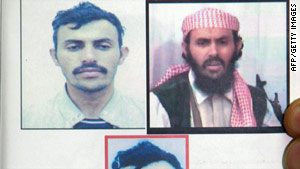
Yemen says 6 al Qaeda leaders killed


Air raids in northern Yemen killed six operatives with al Qaeda in the Arabian Peninsula, Yemen's Ministry of Defense said Friday.

The main target was the group's military commander, Qassim al-Raimi, the Yemeni Embassy to the United States said in a written statement.

The defense ministry said al-Raimi was killed.

A Yemeni government official briefed in detail on the matter said the Yemeni government is "almost certain" that al-Raimi was killed.

The official described al-Raimi as the third-highest-ranking figure in al Qaeda in the Arabian Peninsula in Yemen.

The group has claimed responsibility for the attempted bombing of a U.S.-bound airliner on December 25. Investigators have said intelligence ties the bombing suspect, Umar Farouk AbdulMutallab, to the group.

Yemeni forces carried out an air raid at 2:30 p.m. near Alajasher in the country's far north, the Yemeni Embassy to the United States said in its statement.

"Security authorities suspect that three of al Qaeda's most dangerous operatives -- Ammar Ubadah al-Waeli, Ayeth Jaber al-Shebwani, Saleh al-Tayes -- may have been also eliminated," the embassy said. "Furthermore, counterterrorism units backed by helicopters continue to hunt down two al Qaeda operatives that escaped the air raid."

The Yemeni government official briefed on the matter said al-Shebwani was killed. He was in charge of recruiting people into the group in the Ma'areb region and was a "very important figure, the person who provided logistical support to all foreign nationals recruited in AQAP in Yemen," the official said.

A Yemeni security official with knowledge of the case said colleagues said another operative killed was Abu Ayman al-Masri.

The U.S. National Counterterrorism Center's Web site says that after al Qaeda in the Arabian Peninsula emerged in January 2009, its leadership was composed of al-Raimi and the group's emir, Nasir al-Wahishi, both of them "veteran Yemeni extremist leaders," as well as two Saudis, one of whom surrendered to Saudi authorities last year.

Friday's air raid "marks the fifth major strike on al Qaeda positions in less than a month," the embassy said.

Adopted Haitian kids were almost home when quake hit

If he could, Jim Boston would hop on a plane right now to bring his daughter, Farica, home.

The 4-year-old Haitian girl has been part of his family since the day he and his wife, Rebecca, began the adoption process -- and multiple trips to visit her -- more than two years ago.

She has the passport that will allow her to leave. She shares the Boston name with her parents and five siblings, including another Haitian girl. She was just weeks from leaving the Port-au-Prince orphanage where she's lived her whole short life.

The only thing that was keeping her from flying off to Chicago, Illinois, with her parents: the visa to let her into the United States. And that was set to come by month's end.

"We were two or three weeks away from going there to get her," Boston said Thursday. "We're so afraid. We expect rioting to happen soon. What little food they have is in jeopardy. ... We're trying to appeal for help in getting these children special status."

Looking out for Farica in the interim, while adoption proceedings stand frozen, are two sisters from the Pittsburgh, Pennsylvania, area. Jaime and Ali McMutrie, 30 and 21 respectively, run one of the houses at the Brebis de Saint-Michel de L'Attalaye (BRESMA) orphanage in Port-au-Prince.

In frantic messages they sent from a borrowed BlackBerry nearly 24 hours after the earthquake, the sisters shared the good news that all of the children in their care were alive. But they pleaded for urgent assistance. They and the children were living in the yard without food or water. They worried that babies would die from contaminated water.

"I want to make sûre évryoné ùnderstands we cant stay inhaiti and thé kids will not live if théy stay," Jamie typed in a rush.

Jamie's husband, Doug Heckman, said his wife and sister-in-law help oversee the care of 26 children, many of them little ones or those who've needed special care, including Farica Boston, who arrived sick when she came to the orphanage right after she was born.

"They're very strong women, and they're very resourceful," said Heckman, 34, who's gotten used to the long-distance relationship he shares with his wife of four years. "The thing that freaks me out the most is that I know she is not going to leave these kids," even though as a U.S. citizen she could get out of Haiti. Jamie and Ali are "not going to abandon these children, even if it's life threatening. I can't imagine them leaving these kids, and if they did, I don't know what it would do to them."

According to UNICEF, there were an estimated 380,000 orphans in Haiti in 2007, a number that's bound to change as the death toll from the earthquake rises.

About 800 to 900 U.S. families are in the process of adopting children from Haiti, said Tom DiFilipo, president of the Joint Council on International Children's Services, an advocacy group for children in need of families. Of those, only about 30 kids are as far along in the process as Farica Boston, he said .

Because documentation in Haiti may be buried beneath rubble, the organization Friday morning launched a database to collect information on where the adoption process of each family stands. Adoptive parents are encouraged to enter information in the registry on the JCICS Web site.

A memo issued by the U.S. State Department on Thursday served as a reminder of how complicated helping children affected by natural disasters can be.

While concerned Americans may offer to open their homes to suffering kids (beyond those already in orphanages), the department said determining who is truly orphaned -- and not just separated from family members -- can be a huge challenge. Likewise gathering the documentation needed to legally fulfill adoption requirements can be next to impossible.

BRESMA, which is home to about 150 children, is one of the country's 67 crèches, orphanages that are licensed to perform adoptions, said Diana Boni, the Haiti and Liberia programs coordinator for Kentucky Adoption Services, who's worked with BRESMA for seven years.

"We've been incredibly blessed. We have no fatalities and no serious injuries as of yesterday afternoon," Boni said Thursday. "Almost all of them have [adoptive] families. A lot of these kids under Haitian law are not Haitian. They're legally children of U.S. citizens ... and children are going to die because of bureaucratic paper delays."

Grass-root efforts are under way to help.

A Pittsburgh blogger, Virginia Montanez, is sharing updates on BRESMA on her blog, "That's Church." One Facebook page, "Let's Help Them Get Out of Haiti," encourages people to sign petitions to help the group. Lawmakers in Pennsylvania have reached out too, saying they're determined to help.

Children are going to die because of bureaucratic paper delays.
--Diana Boni, Kentucky Adoption Services

But while concerned citizens, families and adoption agencies try to make sense of what's going on and what's possible, false information and misunderstandings are circulating. Some parents spoke about a special meeting (not true) planned at the State Department on Friday morning to discuss their children. And at least one agency has been putting out word that 150 kids were going to be airlifted from BRESMA to Pittsburgh.

"That's a very popular rumor," Boni said, hoping to put it to rest. "The State Department has issued zero visas since this earthquake."

While the State Department does issue visas, DiFilipo of the Joint Council on International Children's Services reiterated that the Department of Homeland Security must approve the visas beforehand. He said he's been in touch with both departments.

"We're not just working on kids with finalized adoptions. We're trying to find solutions for all those children," he said. "We don't want people to forget the most vulnerable children -- the orphaned."

As officials work to find answers, Farica's parents must hold onto hope that their prayers will be answered and their family made whole.

"I don't know if she understands. She's only 4," Boston said. "If I could talk to her I would tell her I love her and that I'm doing everything I can to get her home."

Why I can't watch 3D TV


When it comes to 3D television, I don't see it. Literally. The technology that's supposed to convince me that a 3D image exists when I look at a 2D screen doesn't work for me.

Nor does it work for a small but significant percentage of the population -- 4 percent to 10 percent, depending on which expert you ask. Me, and millions of people like me, are being left behind by content and hardware companies as they move to 3D.

I don't mean to complain. It's not the end of the world. Flat-viewers, like me, can watch 2D versions of 3D content. I saw "Avatar" in the non-3D version. As a bonus, the theater was nearly empty--the 3D showing down the hall was more crowded. Plus, we didn't have to wear those dorky glasses.

Of course, we are social beings, and not being able to view 3D means that group or family outings to 3D showings are awkward for the flat viewers, who may have to sit through a showing that will cause headaches or just look bad to them.

But the flat-viewer's experience with 3D imagery can vary. While I find viewing 3D imagery uncomfortable, Daniel Terdiman, another person at CNET who can't see 3D, saw the 3D version of Avatar and wore the 3D glasses. It looked fine to him, just not 3D.

Manufacturers are mute

At CES this year, the trend toward 3D in home television sets was unmissable, but there was no mention by the manufacturers of how this move would affect flat viewers. I was curious how the hardware companies, which fight for every point of market share jealously, could cavalierly ignore the large number of us who won't like this new direction.

It's a lot of market. How are they planning to deal with losing it?

Oddly, none of the HDTV manufacturing companies I reached out to could provide a direct comment on this topic, but I did talk with people familiar with the industry and with an optometrist who has a vested interest in promoting the growth of 3D content viewing.

Bruce Berkoff of the LCDTV Association and formerly a marketing executive at LG, noted that for all the hype around 3D, the television manufacturers are not really investing much in putting products on store shelves, nor are they expecting consumers to pay for it yet.

Adding the capability for televisions to display alternating images for stereoscopic viewing through electronic shutter glasses is not expensive. It's the glasses themselves that are, and only a few 3D-capable sets actually come bundled with them. So consumers will be able to soon buy televisions ready for 3D without spending much.

Berkoff, and everyone else I talked to about 3D TV, reminded me that a good 3D TV is also a good 2D TV. You should be able to turn off the 3D display features and view content designed specifically for 3D but in 2D: You just show the view for only one eye. If the refresh rate of the program is high enough, you should not notice much of a difference in picture quality.

Get your eyes examined

From the optometrist's perspective, the inability to process stereoscopic imagery is, for many people, a treatable condition. Dr. Brad Habermehl, president of the College of Optometrists in Vision Development, told me, "You don't have to be a 3D refugee if you get to the root of the problem. The majority of stereo-blind people really can be helped."

Habermehl says that there are methods to teach people to see in 3D. Using graduated methods and physical aids (lenses) as "training wheels," he says, people can eventually learn how to "point both eyes to focus on the same space." It's like riding a bike. Once you learn, the training wheels come off and you can't imagine not doing it. "Vision is definitely learned," he says. "That's what vision training is."

The doctor sounded to me suspiciously like a spokesperson for the 3D television manufacturers, or at least a recipient of some marketing dollars from them. But he's not.

"It would be nice if they would fund us," he said. But after reminding me that "Avatar" had already made $1 billion in box office receipts, he added, "I don't think the industry is worried about this."

Personally, I have no interest in undergoing medical treatment just so I can spend more money on consumer electronics. Although Dr. Oliver Sacks, in a compelling New Yorker article, did make me wonder what my kind is missing.

And regardless of whether you see in 3D or not, the technology is inexorably changing the visual language of movies and television shows. When directors create shows for 3D, they can't rely on cinematic methods viewers are used to in 2D for conveying action, depth, and movement.

Hard cuts and swooping camera moves can disorient viewers new to 3D. The new standard of practice is to lock down the camera and move the action around it, instead of the reverse, which is the case in today's 2D movies. Good 3D movies today will appear subtly more stately and cinematic than 2D shows.

The future of the 3D feature

For all the hype at CES, 3D for the next few years is likely to be a "feature" in the new crop of TVs, according to Gary Merson of the HDGuru3D site.

"It's not black-and-white to color," Merson says. "It's a feature, like Internet connectivity and stereo."

He also points out that the content is not there yet, and that many consumers have only recently upgraded their tube televisions to HD flat screens.

For people like me, for whom the world is flat, this feature can not roll out slowly enough.

Apple to unveil tablet in January: report

SAN FRANCISCO – Apple Inc is set to announce a new tablet device later this month, the Wall Street Journal reported on Monday, as anticipation builds about what could be the company's biggest product launch since the iPhone.

Apple plans to ship a multimedia tablet with a 10- to 11-inch touchscreen in March, the report said, citing people briefed by the company.

Although analysts and media reports have been speculating for months that Apple planned to unveil a tablet in the first half of 2010, Apple has never confirmed it was working on such a device.

The Wall Street Journal-affiliated blog All Things Digital reported earlier Monday, citing unnamed sources, that Apple is planning to make a major product announcement on January 27 at an event in San
Francisco.

An Apple spokesman declined to comment.

Excitement about the tablet in recent weeks has helped propel Apple's shares to record levels, analysts say. The company's stock rose 1.6% and finished at $214.01 on Monday, a new closing high.

Analysts expect the tablet to be priced at between $500 and $1,000.

AirAsia, Jetstar form 'world's first' budget airline alliance

SYDNEY - Jetstar and AirAsia unveiled plans on Wednesday to slash costs and ticket prices by pooling some resources, taking the first step in an alliance which could transform the Asian budget market.

Jetstar chief executive Bruce Buchanan said the non-equity arrangement, described as a world first between low-cost airlines, was expected to save hundreds of millions of dollars in costs.

"By getting together and focusing on areas where we can actually reduce costs we think it's a really exciting opportunity," Buchanan told reporters, calling the deal an "important first step".

"We have identified... many hundreds of millions of dollars of cost saving opportunities, and we think that is an exciting opportunity for us as we launch this partnership going forward."

Jetstar, a subsidiary of Australian flag-carrier Qantas, will share parts and ground and passenger handling services with Malaysia's AirAsia, which is Asia's biggest budget airline.

They will also investigate jointly procuring new aircraft, cooperate on buying engineering and maintenance supplies and will carry each other's passengers stranded by breakdowns and other disruptions.

Qantas chief Alan Joyce said the deal would give both airlines an edge in the competitive Asian market.

"Jetstar and AirAsia offer unmatched reach in the Asia-Pacific region, with more routes and lower fares than their main competitors, and this new alliance will enable them to maximise that scale," he said.

Jetstar, operating 60 aircraft, is the world's largest long-haul budget carrier, while AirAsia leads the Asian low-cost market with 85 planes servicing more than 60 destinations.

Powered by Blogger