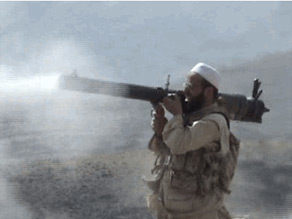
Al Qaeda priority: Western targets


(CNN) -- Between late July and early December of 2008 four members of a Belgian-French group returned to Europe from the Pakistan-Afghanistan border region.

On December 11, Belgian counter-terrorism police launched one of the largest operations in the country's history, arrested six people and charged them with participation in a terrorist group.

According to Belgian counter-terrorism sources, the trigger for the Brussels arrests was an intercepted e-mail sent by one of the alleged recruits, Hicham Beyayo, in early December shortly after he returned to Belgium.

The e-mail allegedly suggested that Beyayo had been given the green light to launch an attack in Belgium. However no explosives were recovered by Belgian police, and some terrorism analysts are skeptical that an attack was imminent.

Beyayo's lawyer, Christophe Marchand, told CNN in February that the email was merely "tough talk" to impress an ex-girlfriend. Belgian authorities continue to insist that the alleged cell was a potential national security threat.

Of those still thought to be at large, one was Moez Garsallaoui, whose wife Malika el Aroud was among those arrested in Belgium. Read how al Qaeda is changing

He issued this threat to Belgium authorities on his wife's Web site on May 11 this year. "If you thought that you could pressure me to slow down through the arrest of my wife, you were wrong. It won't stop me fulfilling my objectives...the place of my wife in my heart and the heart of all the mujahedeen is greater than ever. ... Surprises are sure to be in store for you in the days ahead. Those who laugh last, laugh more."

Such threats will have caused concern because of Garsallaoui's wide connections in European militant circles.

Two of his Brussels associates, Bassam Ayachi, 62, and Raphael Gendron, 33, are in custody in Italy, charged with being leaders of a logistical support team for al Qaeda. They have denied the charges.

The duo, who were detained in the port city of Bari in November for trying to illegally smuggle Middle Easterners into the country, had allegedly talked to each other in their detention center about what sounded like a scheme to attack Charles de Gaulle airport in Paris, a conversation bugged by Italian police. French officials have said they were never aware of a concrete plot to attack the airport.

According to a senior Belgian intelligence official, Garsallaoui, his wife, and several others who traveled to Pakistan were all connected through the Centre Islamique Belge, an organization Belgian authorities say espouses hardline Salafist and pro-al Qaeda views.

In past interviews the center's founder Bassam Ayachi has said his organization concentrates on pastoral care for Muslims in Brussels and did not promote pro-al Qaeda views.

Members of the Brussels-based group are believed to have received terrorist training in other countries besides Pakistan.

In late May, several days before President Barack Obama traveled to Cairo, Egypt, to give a major speech, several Belgian citizens were arrested in Egypt and accused of being members of a terrorist cell affiliated with al Qaeda.

A senior Belgian counter-terrorism official told CNN that two Belgians now in Egyptian custody were known associates of Garsallaoui at the Centre Islamique Belge and are believed to have received military training with an ultra-extremist Palestinian group in Gaza.

"Anybody who gets such training is obviously a potential danger if they return to Europe," said the official.

While in Pakistan the Europeans also had contact with Bryant Vinas, an American who told prosecutors he was there to fight in Afghanistan. Read how Vinas went to fight Americans in Afghanistan

New Attack Plans

Vinas says he was told, while on a mountain walk with a Belgian-Moroccan friend, Hicham Bouhali Zrioul, about a new course being taught by al Qaeda called "international operations," set up by its head of international operations. Vinas later identified him as Abu Hafith.

Hafith, he stated, was responsible for recruitment and direction of terrorist cells, and attacks outside Pakistan and Afghanistan. Hafith was identified by his initials in the legal document but CNN obtained his name from a source briefed on the case. He is believed to be still at large in the Pakistan-Afghan border area.

Vinas was told that the training course Hafith set up focused on kidnapping and assassination, including instruction on the use of silencers and how to break into a property. Read how al Qaeda is adapting its training

The revelations raise the possibility that al Qaeda was developing a program of targeted assassinations. Though al Qaeda has carried out some assassinations in the past, most of its attacks in the West have not targeted any particular individuals but crowded areas, such as mass transport.

Vinas stated that Zrioul also discussed with him an attack on the Brussels metro, telling him it was a soft target because it was poorly protected. He said Zrioul also raised the possibility of launching an attack on a European football stadium.

A senior Belgian intelligence official told CNN that Belgian security services only learned about these conversations in March 2009 after Vinas met with Belgian prosecutors in New York. Although concerned, Belgium's intelligence service concluded that no concrete plot had likely existed, said the official.

Such conversations illustrate the terror networks' continued desire to inflict mass casualties.

Vinas stated that he himself gave detailed briefings to al Qaeda chiefs in Waziristan in September 2008 about how the Long Island Commuter Rail service worked, according to a federal indictment earlier this month.

Shortly after Vinas' arrest in 2008, Penn Station and much of the New York mass transit system was put on

Honda adds 440,000 cars to recall over airbags

(CNN) -- An additional 440,000 Honda vehicles are being added to a recall initially announced in November to repair a potential defect in airbag inflation systems, American Honda Motor Co. said Friday.

The 2001 Honda Civic is among the vehicles covered by the recall.

The 2001 Honda Civic is among the vehicles covered by the recall.

The recall involves driver-side airbags in certain 2001-02 Honda Accords, 2001 Civics and 2002-03 Acura TLs, the company said in a news release.

The affected vehicles will require the replacement of the steering-wheel-mounted airbag inflator.

"In some vehicles, airbag inflators can produce over-pressurization of the driver's [front] airbag inflator mechanism during airbag deployment," the release said. "If an affected inflator deploys, the increased internal pressure may cause the inflator casing to rupture. Metal fragments could pass through the cloth airbag cushion material, possibly causing an injury or fatality to vehicle occupants."

Honda spokesman Chris Noughtan said the potential defect has resulted in six known injuries and one known death.

The company will send a recall notice in the mail over the next few months, the release said. Owners may check their car's recall status by visiting the Honda "Owner Link" Web site at www.owners.honda.com/recalls or the Acura "My Acura" Web site at www.owners.acura.com/recalls.

"Only certain vehicles are affected, and concerned owners of 2001-2002 Accords, 2001 Civics and 2002-2003 Acura TLs are encouraged to wait to receive a recall notice in the mail before scheduling an appointment with their local dealer," the company said.

Trials of Iran election protesters under way

TEHRAN, Iran (CNN) -- Trials for nearly 100 Iranians arrested in the aftermath of the disputed June 12 presidential elections began Saturday, two Iranian news agencies reported.

Dozens of protesters face charges in the aftermath of Iran's presidential elections.

Dozens of protesters face charges in the aftermath of Iran's presidential elections.

"The court, to investigate the charges against the first group of those involved in the recent disturbances, is now in session," said the state-run Islamic Republic News Agency (IRNA).

"The trial of those accused of participating in the Velvet Revolution started at 9:10 a.m. (12:40 a.m. ET) following recitations from the holy Qoran," the semi-official FARS news agency reported.

The defendants face a variety of charges that include attacking government facilities and setting fire to them, destruction of public property, creating panic in public and beating up members of the security forces.

Hundreds of people were detained after the election won by Mahmoud Ahmadinejad. Supporters of reformist candidate Mir Hossein Moussavi took to the streets to protest what they called a fraudulent presidential election.

Among the nearly 100 defendants are several members of the reformist Mosharekat Party and a member of the central committee of the Kargozaran Party, which is close to powerful cleric and former Iranian President Ali Akbar Hashemi Rafsanjani, FARS reported.

A member of Parliament's special committee for monitoring the condition of detainees complained Saturday that the trials began without the committee's knowledge.

"We were given no information," said Ghodratollah Alikhani, a member of the committee, according to the semi-official ILNA news agency. "Judiciary officials did not tell us anything about these trials."

"The office of Tehran's prosecutor had earlier said that the court would try a number of people arrested for street demonstrations, but instead reformist activists are being tried," Alikhani added.

At the same time Iran was trying the detainees, it released thousands of other prisoners after Supreme Leader Ayatollah Ali Khamenei pardoned them or commuted their prison terms, FNA reported Saturday.

"Forty percent of the country's inmates, who account for around 68,000 people, were liable to the amnesty," Mohammad Ali Zanjirei, a top official with the State Prisons Organization, told FNA.

He said 17,000 out of the 68,000 inmates were freed, and the rest will see their prison terms commuted or be granted leaves in the final months of their sentences.

The idea was originally proposed by Judiciary Chief Ayatollah Seyed Mahmoud Hashemi Shahroudi, FNA reported. Khamenei made the amnesty on the feast of Mab'ath, which marks assignment of the Prophet Mohammad to prophethood.

An Iranian legislator promised this week that the majority of the roughly 300 detainees arrested during post-election violence will be set free in coming days.

Nearly 140 were already freed this week, National Security and Foreign Policy Commission member Hojjatoleslam Hossein Ebrahimi told FNA on Thursday.

Iran shut down a nonstandard detention center, called Kahrizak, in southern Tehran on Tuesday on Khamenei's orders, FNA reported.

Hong Kong youth caught in wave of ketamine addiction

HONG KONG, China (CNN) -- A 16-year-old Hong Kong boy makes two phone calls for delivery: one for pizza, the other for the drug ketamine. Two teenage girls are found semi-conscious in a car park in the southern Chinese enclave after overdosing on ketamine. A 13-year-old boy joins a gang and is given free ketamine.

Glass capsules containing ketamine, which has become the drug of choice for Hong Kong's youth.

Glass capsules containing ketamine, which has become the drug of choice for Hong Kong's youth.

These are anecdotes told to CNN by police, a family doctor and the former gang member. Ketamine has become the top drug of choice among young people as the number of people under 21 taking drugs has surged 57 percent in the last four years in Hong Kong, said Commissioner for Narcotics, Sally Wong.

"We started off with a very small number of young people taking drugs. We are now more worried about the trend," Wong said. "We don't want a runaway trend, that's why we are stepping up action."

Ketamine, an animal tranquilizer, puts youth in a dazed stupor for about two hours.

An oversupply of the drug in Hong Kong and the fact that it is cheaper than other narcotics makes ketamine popular with young people, said Superintendent Wilson Fok of the Hong Kong Police Narcotics Bureau.

One gram of ketamine sells on the street here for $13 and is enough to be shared with two other people, while cocaine, for example, sells for $103 a gram, Fok said.

The drug is trafficked into Hong Kong from other parts of Asia, such as India and mainland China, Fok said.

Police have recently stepped up their efforts to crack down on drug use at clubs and bars in Hong Kong and Shenzhen, a city in mainland China just across the border. Nearly 120 alleged drug users from Hong Kong, mostly under the age of 30, were arrested at entertainment venues in Shenzhen in July and held for 15 days in sweeps that made headlines for days here, according to the South China Morning Post.

However, narcotics police have detected a trend away from entertainment venues.

"Forty percent of young people abuse drugs in public toilets and playgrounds. That's what our recent data from last year shows," Fok said. "They want to find some other places to take drugs."

The problem has gotten so bad that authorities have decided to do something never done here before: random school drug tests. Video Watch a report on Hong Kong's teen drug problem »

Beginning in September, some two dozen schools will conduct tests. Officials say the drug screening will most likely be in the form of urine tests, though they are still working out the details. Ketamine can be detected in urine for at least three days.

Alman Chan, principal of Hong Kong's only drug rehab center for youth, the privately-run Christian Zheng Sheng School, said it was clear more young people were taking drugs.

"Just look at our school development. I was here 14 years ago. At that time, I was the only teacher. I had 18 kids. I only had one student who was 15," he said. "But now, I have one third -- about 40 of them -- who are 15 years old or younger. That shows you the number of students getting into drugs is bigger and also getting younger and younger."

There were a few reasons why children were getting involved with drugs, such as troubled homes and difficulties at school, he said.

"People are more concerned about material things and they are getting lost," he added.

Hong Kong Police have arrested kids as young as age 10 for serious drug offenses.

Police said last week they had busted a network that allegedly recruited teenagers to sell illegal drugs, and one of those arrested -- a 14-year-old school dropout -- was found with 28 grams of ketamine, according to the South China Morning Post.

Dr. Cheng Chi Man, a family practice doctor, runs a seminar that trains doctors to detect the signs of drug abuse in young patients: drowsiness, skin problems, frequent urination (ketamine can affect bladder function) and frequent sick leave.

"When we were 10 years old, we were still in primary school watching TV and eating candy. But they are now taking drugs."

Tai Ming Hung said she learned her son Keith was using ketamine after he had been treated at a hospital for taking it at a karaoke bar.

"I was in denial. I just didn't believe it was true. When I first heard about it, we all didn't know how to react, because we hadn't heard of those drugs before," she said. "I didn't really understand why we have these harmful drugs in the world. And I was so afraid that it would kill my son."

Keith, who said he began using ketamine at the age of 13 when he joined a gang, has recovered and is now living at Alman's school.

"I have a feeling that he's really growing up, he keeps improving," Tai Ming Hung said.

Ketamine abuse is not limited to young people -- it is the second most popular drug among all age groups in Hong Kong, Fok said.

A 24-year-old man in Hong Kong was just convicted of killing a girl, whose dismembered remains were found by authorities. His lawyer said he was high on ketamine and Ecstasy, and did not know how the girl had died.

For the worst young offenders in Hong Kong, the court ships them off to Chan's school in a remote part of Lantau Island. The closest road is a three-hour hike through the woods.

Chan calls the school "the last stop before jail" for drug abusers.

CNN visited the campus on an old pig farm, where 99 boys and 24 girls live. Their curriculum involves regular school subjects and chores. The goal is for each student to finish their court probation and either sit the university exam or continue on to a vocational school.

Many of the students have become interested in video editing and photography. There is a video lab on campus and the students showed CNN some video projects they have done for clients.

Other students run a pizza parlor and tea shop on a neighboring island.

The average stay is three years and students are encouraged to plan for life after rehab.

"We have vocational training. We help them get some marketable skills; therefore, they may get a job or continue training afterward," Chan said. "I believe everyone deserves a second chance."

RP-US ties at forefront of Arroyo-Obama meeting


MANILA - Philippine President Gloria Macapagal-Arroyo and US President Barack Obama finally met at the White House Thursday (early morning Friday), with the two leaders praising Philippine-US partnership in a range of issues. Arroyo, the first Southeast Asian leader who was received by Obama in the White House, arrived at around 3 p.m. at the executive mansion, where pro- and anti-Arroyo groups held protests outside the White House gates. The meeting, held at the Oval Office, lasted 45 minutes. She was accompanied by Philippine Ambassador to the US Willy Gaa, Foreign Affairs Secretary Alberto Romulo, Senator Miriam Defensor-Santiago, House Speaker Prospero Nograles, presidential adviser on climate change Heherson Alvarez and Executive Secretary Eduardo Ermita. Speaking to members of the media, Obama hailed the relationship of the two allies, and mentioned the contributions of Filipinos to America. "We are proud to have 4 million persons of Filipino ancestry contributing to our country each and every day in all walks of life. The fact that we have Filipino veterans who have walked side by side with American soldiers on behalf of freedom, all those things that have strengthened the relations of our two countries," he said. Obama said they primarily discussed the fight against terrorism during their meeting. "I am very pleased that President Arroyo has made such good progress on dealing with counterterrorism issues. She has initiated a peace process in Mindanao that we think has the potential to bring peace and stability to a part of the Philippines that has been wracked by unrest for too long," Obama said. 'Above its weight' He also said they are "grateful" for the Philippines' "strong voice" in issues concerning the region, particularly in Southeast Asia. "We are very grateful of the stong voice that the Philippines has provided in dealing with issues in Asia, ranging from the human rights violations that have too long existed in Burma, to the problems that we're seeing with respect to nuclear proliferation in North Korea," he said. He also said that the Philippines will be the "coordinating country" in the US relationship with the ASEAN." "So we're gonna be having a busy agenda together, working to reduce the threat of nuclear weapons, improving the multilateral partnerships in Asia that can create greater security and greater prosperity for all countries," he said. "Although the Philippines is not the largest of countries, using a phrase in boxing, it punches above its weight in the international arena," Thanking US Arroyo meanwhile thanked Obama for inviting her to the White House, and reiterated the Philippines' support to issues America is pursuing in the region. "The US is essential to the economic, diplomatic, and national security of our country. We are very thankful for the US as an important ally in helping to professionalize our military, in making it more effective," Arroyo said. "Just as important, we are thankful to the US for being such a good ally... working on 'soft power', helping us to build bridges, roads, schools, not only in Mindanao but across the nation. And this assistance by the US has gone a long way in helping us achieve what we have been able to achieve in the peace process in Mindanao in the Southern Philippines and also in our fight against terrorism," Arroyo said. She also added that she has informed Obama on the progress of the peace talks with the Moro Islamic Liberation Front (MILF). She also said that the Philippines will stand behind the US in two crucial issues in the region: Burma and North Korea. She also thanked the US's help in facing climate change, and the granting of benefits for Filipino World War II veterans. Obama also praised Arroyo on her "outstanding" work. "President Arroyo has done outstanding work on a range of issues. She mentioned the areas where the United States and the Philippines are of one accord, and as evidenced here today, she's somebody who knows the issues, she has experience leading the Philippines through some very difficult times," Obama said. "She has expressed great friendship towards the United States, and aside from her great personal charm we are very appreciative of the concrete ways that her administration has pursued strengthening ties with the United States, so I'm very grateful for that," he added.

4th visit to White House This is Mrs. Arroyo's 4th visit to the White House since she became President. Her first visit was back in November 2001, following the terror attacks in the United States, and was received by then US President George W. Bush. She again visited the Bush White House in May 2003 in a state visit, and also in 2008, upon Bush's invitation. Prior to the meeting, Mrs. Arroyo met with several US lawmakers and government officials at the Willard Hotel. Among them, according to Press Secretary Cerge Remonde, were Admiral Dennis Blair, director for National Intelligence; US House Speaker Nancy Pelosi; and US Senator Sheila Jackson Lee. She also met with the leaders of the RP-US Friendship Caucus. Arroyo and her delegation arrived in Washington for the four-day working visit in the US last Wednesday (Thursday morning Manila time). The President and her party deplaned at the Andrews Air Force Base in Maryland. Aside from Washington, the President will also go to New York, Chicago, and Guam. She is also set for an interview with business news network CNBC. With reports from Rodney Jaleco and Ging Reyes, ABS-CBN North America News Bureau, in Washington, and Reuters

'People Power' icon Cory Aquino dies

Sen. Benigno "Noynoy" Aquino III announces the death of his mother, former president Corazon Aquino


MANILA - Former President Corazon Cojuangco Aquino passed away Saturday morning after battling colon cancer for more than a year. She was 76.

"Our mother peacefully passed away at 3:18 a.m. August 1, 2009 of cardio respiratory arrest. She would have wanted us to thank each and every one of you for all the prayers and your continued love and support. It was her wish for all of us to pray for one another and our country. Hinihiling po ng aming pamilya ang konting panahon para makasama namin ang aming mahal na ina," a statement from the Aquino family read.

Details of the former president's wake will be announced later, the family said.

Once a reluctant housewife, Aquino was known as an icon of Philippine democracy after the EDSA 'People Power' revolution removed the Marcos dictatorship and restored democracy in the Southeast Asian archipelago in 1986.

Aquino served as the nation's president until 1992 when she gave way to her successor, President Fidel Ramos. Even in retirement, she remained in the public eye and continued to speak out on political issues.

In March 2008 her family announced that Aquino had colon cancer.

Various healing masses had been held in different parts of the country after she was confined at the Makati Medical Center starting June 25. Thousands attended the masses praying that one of of the world's democracy icons would recover. Prayers and get-well messages were also posted on her website, coryaquino.ph.

Last Monday, the Aquino family said Mrs. Aquino's condition had turned to "guarded" due to her fluctuating blood pressure. On the same day, President Gloria Macapagal-Arroyo started her State of the Nation Address by leading a moment of silence for her predecessor.

Her son, Senator Benigno 'Noynoy' Aquino III, confirmed that the former leader's cancer had already spread to her liver.

"Her weakened condition does not allow chemotherapy. We have reached the point where you're not sure if the intervention will help or worsen the condition," he told reporters.

Last week, her supporters tied yellow ribbons along Times St. and Examiner St. in Quezon City near Mrs. Aquino's residence, and also outside the Makati Medical Center, symbolizing hope and prayers for her recovery and as a show of support for Philippine democracy.

People power

Aquino was propelled to the Philippines presidency in the 'People Power' revolution in 1986.

For three days in February of that year, the world watched as the woman in a bright yellow dress led millions in a peaceful uprising that toppled dictator Ferdinand Marcos, who had ruled with an iron fist for two decades.

During the next six years, Aquino -- a devout Roman Catholic – led the restoration of democracy and changed the country's Constitution.

But her presidency was marred by at least six failed military coups, political squabbling, insurgent attacks and her failure to change a political system dominated by elite family clans.

Time magazine in 2006 named Aquino one of Asia's heroes, praising her "quiet courage" and describing her as "the symbol of People Power and an inspiration to others around the world struggling against tyranny."

On June 25, Aquino was brought to the Makati Medical Center due to loss of appetite. She reportedly refused further medical treatment. Family members were by her side and the country prayed for her recovery.

Privilege and wealth

Born into the Cojuangco clan in the northern province of Tarlac on January 25, 1933, Aquino was a product of privilege, power and wealth.

Educated in the United States and Manila, she entertained no political ambitions -- but all that changed when she met and married Benigno "Ninoy" Aquino Jr., a bright young journalist from another prominent Tarlac clan, in 1954.

Ninoy was seen by many to be a president in the making, but for Marcos, the then-senator was a threat. In September 1972, Marcos declared martial law and jailed hundreds of his opponents and critics, including Ninoy.

Corazon Aquino helped keep the opposition alive, speaking out on behalf of her husband and demanding change.

Aquino assassination

In 1983, against the advice of friends, Ninoy flew back to the Philippines from exile in Boston to seek an audience with the ailing Marcos. But before he could even get off the plane, he was gunned down by assassins.

His grief-stricken widow flew back to the Philippines, where she was quickly thrust into the role of uniting the opposition.

"I don't seek vengeance, only justice, not only for Ninoy but for the suffering Filipino people," Aquino declared as she reluctantly accepted the nomination of her peers.

Marcos won the 1986 elections, which were marred by massive irregularities.

The Aquino-led opposition, backed by the Catholic church, soon rallied about one million people on the street -- "People Power" was born, Marcos was quickly ousted and Aquino took the presidential oath of office.

She quickly set up a commission to draft a new constitution, dismantled the network of Marcos cronies that controlled the economy and freed scores of political activists.

Aquino also began talks with communist and Muslim insurgents, but her efforts would soon be undermined by problems within the coalition government she built. She later survived a series of bloody coup attempts.

Citizen Cory


In retirement, Aquino remained in the public eye, often speaking out against alleged abuses in government.

Seventeen years after she stepped down from office, Aquino continued to enjoy the trust of the majority of Filipinos. A February 2009 survey of Social Weather Stations showed 3 out of every 5 adult Filipinos have much trust in the former president. She enjoyed a net trust rating of +38.

She also became a vocal critic of current President Arroyo, whose family has been accused of massive corruption, and joined street protests against her until she was diagnosed with colon cancer in March of last year.

In the 1990s, Aquino said the presidency had taught her a valuable lessons in governance.

"I realized that I could have made things easier for myself if I had done the popular things, rather than the painful but better ones in the long run. After all, in the long run, I wouldn't be around to be blamed," she said.

As "Citizen Cory," she was active in non-government organizations promoting democracy, peace, and woman empowerment, and in recent years, micro-enterprise.

Until her last years as a private citizen, she remained a strong political influence and moral force, opposing moves toward charter change, which many fear will lead to a term extension for President Arroyo.

But on March 24, 2008, Mrs. Aquino faced another tough battle. Her children, Noynoy and Kris, announced that the former president had been diagnosed with colon cancer.

Aquino underwent chemotherapy, and in public remarks made in May 2008, she said she had been responding positively to treatment.

But on Saturday, she lost, perhaps, her toughest battle. -- reports from AFP; Lynda Jumilla, ABS-CBN News

Farmer saves $200,000 with poo power

ROCKWOOD, Pennsylvania (CNN) -- Four generations of Saylors have worked the family's dairy farm for nearly a century, but for the past three years, the cows have been doing something besides providing milk: They've been helping power the place.

Saylor's 600 milking cows power his farm and create  $200,000 a year in savings and cost offsets.

"The farm used to get a lot of complaints," says farmer Shawn Saylor. "It used to stink a lot."

Growing up on the sprawling spread 90 minutes from Pittsburgh, 36-year-old farmer Shawn Saylor developed into a self-described science buff.

So it was no surprise that, when faced with rising energy costs, Saylor turned to technology.

He tapped into an abundant and easily accessible energy source: manure from about 600 cows. Video Watch how cow poo powers the farm »

"It's a pretty simple process. There's not really a lot to it," Saylor said. "Manure comes from the cows, and there's energy left in the manure."

The process is known as anaerobic digestion, and here's how it works:

With the help of a mechanical scraper in the barn, manure drops into a 19,000-gallon tank. The slurry then moves into the digester, which is 16 feet deep and 70 feet in diameter. It's heated there for about 16 days while the bacteria break down the organic matter in order to produce methane gas. That gas is burned in two engine generators to make electricity. See an interactive explaining the process »

Heat created by the generators keeps the digester hot, heats the buildings around the farm and helps provide hot water.

The electricity is used to power this farm and a dozen neighboring homes, Saylor said. And there's still some left over, which he sells back to the grid.

Overall, the poo power helps Saylor's bottom line.

"In savings, there's $200,000 a year, in either extra income from sale of electricity or cost offsets," he said.

"So you're talking about system project costs of over a million dollars to build the system but a payback of five years or less."

Before he installed the system, the pungent smell from the cows could linger for three to four days, Saylor said. "The farm used to get a lot of complaints from motorists, which is understandable. It used to stink a lot."

Now, the digesters reduce 98 percent of all odor, although he admits that if the wind blows, you still "get a whiff."

The farm's leftover solid waste is sold to the community.

"We use it for bedding for the animals," according to Saylor. "A lot of people like to get it for their gardens ... because it doesn't smell much."

Farm-based digesters became popular in the United States during the Arab oil embargo in the 1970s. But the technology didn't catch on, possibly because of the high operational costs and declining energy prices, according to the Department of Agriculture.

Although Saylor had been interested in digesters for years, his dream didn't become reality until 2006. That's when he received a $600,000 grant from Pennsylvania's Department of Environmental Protection.

But Saylor's work isn't done. He intends to make his farm entirely self-sufficient by using waste vegetable oil to make biodiesel fuel.

He said his goal is to waste nothing.

"In a biodiesel system, all the waste products can either be used or fed back into the digester to make more gas," he said. "I've always looked at new technologies and believed you kind of have to work with that stuff to stay with the future."

Former Philippine President Corazon Aquino dead at 76

(CNN) -- Former Philippine President Corazon Aquino, whose "People Power" movement pushed out longtime strongman Ferdinand Marcos less than three years after her husband's assassination, has died at age 76, her family announced Saturday.

"She was the agent of change in Philippine democracy," said Ray Donato, the nation's consul-general in Atlanta.

"She was the agent of change in Philippine democracy," said Ray Donato, the nation's consul-general in Atlanta.

Aquino, the first woman to lead the Philippines, had been battling colon cancer since March 2008 and died of cardio-respiratory arrest at 3:18 a.m. Saturday (3:18 p.m. Friday ET), said Mai Mislang, a spokeswoman for her son, Philippine Sen. Benigno Aquino III.

Funeral arrangements were being set up, Mislang said. Philippine President Gloria Macapagal Arroyo has also announced a 10-day mourning period for the former president, said Ray Donato, the country's consul-general in Atlanta.

"She was the agent of change in Philippine democracy, and almost all the Filipinos I know revered her during her presidency," Donato said.

Aquino had been born into a wealthy family and was educated in the United States. She had not been involved in politics before her husband, opposition leader Benigno "Ninoy" Aquino Jr., was gunned down at Manila's airport in August 1983 as he returned from exile.

The political novice took over the leadership of her husband's movement after his death and challenged Marcos in a 1986 election, making a yellow dress her trademark and bolstered by the support of the country's Roman Catholic churches.

Marcos had been backed by the United States, the former colonial power in the Philippines, for two decades as a stalwart anti-communist. He and his wife Imelda were friends of then-President Ronald Reagan and his wife, Nancy. But widespread allegations of electoral fraud and a mutiny by the country's military led the Reagan administration to withdraw its support, and Marcos went into exile in Hawaii.

Aquino took office in a country with a $28 billion debt, widespread poverty and a persistent Marxist insurgency. She put in place a U.S.-style constitution that limited presidents to a single six-year term and survived seven coup attempts -- including one that was supressed with American help.

She also oversaw the closure of the major U.S. military bases in the country before leaving office in 1992. The bases had been a bulwark of American power in the Pacific since the early 1900s and employed nearly 80,000 Filipinos, but Aquino's opponents argued the country was too dependent on the United States. Aquino announced in 1990 that it was time to begin negotiating the "orderly withdrawal" of U.S. forces.

Noynoy: No state funeral for Cory

MANILA - The Aquinos have decided on a private funeral for the late President Corazon Aquino, who died early morning Saturday after battling colorectal cancer for more than a year.

Senator Benigno "Noynoy" Aquino III said they have decided to have a private funeral, instead of a state funeral.

"It won't be a state funeral," the senator said.

"That was the intention from the start," he said, adding that nobody from the presidential office had contacted him "nor am I waiting to talk to anybody there."

Aquino also said that they have not yet been contacted by MalacaƱang regarding any plans for a state funeral.

"For all intentions and purposes, she had been a private citizen after stepping down, and siguro, to a degree we would like to spend as much time as possible as a family with her," he said, explaining their decision.

Aquino, however, said that there will still be honor guards at the wake, as per tradition in wakes for former government officials.

"I understand there will be honor guards at La Salle. I still have to be briefed on the parts... of the protocol, and I have to consult also the rest of my siblings," he said.

The body of the former leader will lie in state at the La Salle Greenhills (LSGH) gymnasium, and the wake will be open to the public at certain times, Aquino's spokesperson Deedee Siytangco told members of the media at a press conference at the Cojuangco Building in Makati City.

The public viewing at the LSGH will be held starting 5 p.m. Saturday, and will continue until Monday. The daily viewing schedule will be until 4 a.m., and will then resume on 7 a.m. There will also be a mass at the LSGH at 8 p.m. Saturday.

On Tuesday, a necrological service and vigil will be held at the Manila Cathedral, Siytangco said.

On Wednesday, Aquino will be buried at the Manila Memorial Park after a 9 a.m. mass at the cathedral. She will be buried beside her late husband, Senator Benigno "Ninoy" Aquino Jr.

Siytangco also announced details on rules of media coverage of the wake, the television coverage of which will be led by ABS-CBN.With a report from Pia Hontiveros, ABS-CBN News, and the Agence France-Presse

For more news on Cory, log on to http://coryaquino.abs-cbnnews.com

More of Air Force One's New York photo op released

WASHINGTON (CNN) -- And now, the rejects.

The photographs show the Boeing VC-25 making a steep bank not usually seen with passenger aircraft

The photographs show the Boeing VC-25 making a steep bank not usually seen with passenger aircraft

Three months after the White House released a single photograph taken during a photo op of "Air Force One" flying over New York -- a flight that caused panic on the streets below -- the U.S. Air Force on Friday released the remaining 145 photos taken during the flight.

The photographs show the Boeing VC-25 -- a military version of a 747 -- making three passes by the Statue of Liberty, at one point accompanied by an F-16 fighter jet and at another point making a steep bank not usually seen with passenger aircraft. That latter move may have contributed to the chaos below.

The photographs and several lengthy government e-mail chains were released in response to Freedom of Information Act requests by CNN and other news organizations.

The e-mail chains show that the flight's government organizers were aware of many New Yorkers' fears of low-flying aircraft before the April 27 flight, and show a flurry of second-guessing, finger-pointing, damage control and occasional expressions of regret in the hours immediately after the flight.

"Thanks for the heads up on sensitivities in the New York area," an Air Force colonel wrote in an e-mail two days before the flight. "This is an issue that PAG [the Presidential Airlift Group] has also been concerned with. As a result, their coordination has been substantial."

But while the White House, the military and numerous federal and local government agencies coordinated the flight, the federal government demanded secrecy, preparing a news release that was to be distributed only if there were media inquiries.

Those inquiries came during the morning flight, triggering a quick chain of e-mails among government officials.

"We...need to construct some sort of timeline on when folks became aware of it if that is possible," one Air Force official wrote, responding to the public interest.

"I agree we... need to accomplish damage control, but we aren't the POC [point of contact]," the response reads. "Nor do I want to become a belly button for NORAD to push on this one."

Wrote one top Pentagon spokeswoman: "Nothing like having everyone point the finger at someone else so we ALL look like a big bunch of buffoons... can you say Moe, Larry & Curly!??!?!"

In addition to the informal e-mail banter, the documents show the regimented system the Pentagon uses to monitor and respond to breaking news stories.

A U.S. Northern Command document offers this "assessment" of the story: "Last 4 hours: Story reported quickly. Covered by AP, CNN, FOX major news outlets. Local reporting very critical, highlighting 'scare' factor. Local populace very critical of event, due to 9-11 sensitivities."

It continues: "Web site blog comments 'furious' at best. Twitter search reveals 'tweets' regarding two F-16's chasing commercial airliner. Rate of 1 tweet per minute and growing."

"No positive spin is possible. Admit mistake," it concludes.

In another e-mail, USAF Col. Scott M. Turner, commander of the Presidential Airlift Group, was doing just that. "Again, my apologies sir. Real intent here was to honor NYC, not cause mass chaos," it reads.

The next day, the Northern Command's internal memo included depictions of New York's three major tabloids featuring the headlines, "Scare Force One," "Just Plane Stupid!" and "How Dumb Was This!"

The photographs released Friday, meanwhile, show the presidential aircraft making a steep bank, seemingly well beyond the 30-degree maximum for Boeing 747s carrying passengers, according to one airline pilot consulted by CNN. That may have contributed to the anxiety on the ground.

The Pentagon estimated the cost of the flight at $328,835, which includes the Boeing aircraft and the two fighter jets that accompanied it. But, they said, "the hours would have been flown regardless, and the expenses would have been accrued on a different mission."

The VC-25 aircraft is designated "Air Force One" only when the president is aboard. President Obama was not on the plane during the photo op.

After the incident, Louis Caldera, the director of the White House Military Office responsible for the flyover, resigned.

"I have concluded that the controversy surrounding the Presidential Airlift Group's aerial photo shoot over New York City has made it impossible for me to effectively lead the White House Military Office," Caldera said in a letter to Obama. "Moreover, it has become a distraction to the important work you are doing as president. After much reflection, I believe it is incumbent on me to tender my resignation and step down as director of the White House Military Office."

Powered by Blogger